Good Grief, Another Story About WHB Nominee

The narrative started earlier this month with a story by KFYR News.

Now, KOLO News has jumped on the bandwagon.

You should support William Simpson of the Wild Horse Fire Brigade because he’s been nominated as the director of the BLM’s Wild Horse and Burro Program, even though the job title is Division Chief and the role is filled through postings on USA Jobs.

The guy’s a shill for the public-lands ranchers.  He wants to move wild horses from their lawful homes to remote wilderness areas not suited for livestock grazing.

No wonder he has the support of Elko County.

RELATED: Head of WHB Program Not a Political Appointee.

Murderer’s Creek Roundup, Day 13

The incident started on November 29.  Results through December 11:

  • Scope: Murderer’s Creek HMA, WHT
  • Target: Wild horses
  • AML: 140
  • Pre-gather population: 650
  • True AML: TBD
  • Type: Emergency
  • Method: Bait
  • Capture goal: 350 – 400
  • Removal goal: 350 – 400
  • Captured: 116, up from 105 on Day 11
  • Shipped: 102, up from 83 on Day 11
  • Released: None
  • Deaths: 2, no change from Day 11
  • Average daily take: 8.9
  • Unaccounted-for animals: 12
  • Snippet from statute: It is the policy of Congress that wild free-roaming horses and burros shall be protected from capture, branding, harassment, or death
  • Snippet from manual: To protect wild horses and burros from unauthorized capture, branding, harassment or death

The figures above are based on the daily reports.

No horses were caught on Day 12.

The death rate is 1.7%.

The capture total includes 46 stallions, 48 mares and 22 foals.

Youngsters represented 19.0% of the animals gathered, consistent with a herd growth rate of 14% per year.

Of the adults, 48.9% were male and 51.1% were female, no indication of an abnormal sex ratio.

Body condition scores were not given.

The location of the trap site was not disclosed.

The name of the contractor was not provided.

There are no plans to treat any of the mares with fertility control pesticides and return them to the range.

No decisions have made regarding the long-term disposition of horses, which means they could be treated or altered in off range holding, including the stallions.

The status of livestock grazing in the burned area is not known.

RELATED: Murderer’s Creek Roundup, Day 11.

Murderers Creek HMA with Allotments 10-24-24

Murderer’s Creek Roundup, Day 11

The incident started on November 29.  Results through December 9:

  • Scope: Murderer’s Creek HMA, WHT
  • Target: Wild horses
  • AML: 140
  • Pre-gather population: 650
  • True AML: TBD
  • Type: Emergency
  • Method: Bait
  • Capture goal: 350 – 400
  • Removal goal: 350 – 400
  • Captured: 105, up from 99 on Day 9
  • Shipped: 83, up from 56 on Day 9
  • Released: None
  • Deaths: 2, no change from Day 9
  • Average daily take: 9.5
  • Unaccounted-for animals: 20
  • Snippet from statute: It is the policy of Congress that wild free-roaming horses and burros shall be protected from capture, branding, harassment, or death
  • Snippet from manual: To protect wild horses and burros from unauthorized capture, branding, harassment or death

The figures above are based on the daily reports.

The Day 8 results were changed from 3 stallions, 6 mares and 1 foal to 4/5/1.

The death rate is 1.9%.

The capture total includes 40 stallions, 45 mares and 20 foals.

Youngsters represented 19.0% of the animals gathered, consistent with a herd growth rate of 14% per year.

Of the adults, 47.1% were male and 52.9% were female, no indication of an abnormal sex ratio.

Body condition scores were not given.

The location of the trap site was not disclosed.

The name of the contractor was not provided.

There are no plans to treat any of the mares with fertility control pesticides and return them to the range.

No decisions have made regarding the long-term disposition of horses, which means they could be treated or altered in off range holding, including the stallions.

The status of livestock grazing in the burned area is not known.

RELATED: Murderer’s Creek Roundup, Day 9.

Murderers Creek HMA with Allotments 10-24-24

New Study Ignores Harmful Effects of PZP

The researchers examined the effects of PZP on the body condition of adult females, the timing of the breeding season and the survival of their offspring, finding that

  • The body condition of mares without foals improved faster than mares with foals
  • The foaling seasons of the treated herds were later in the year and more spread out
  • Deaths of foals born to treated mares through their second year of life were very rare and no more frequent than those of foals born to untreated mares

The research was carried out at Cedar Mountain and Sand Wash Basin.

Although the timing of breeding changed, the writers found no evidence that the changes were harmful to the treated mares or their foals.

Not addressed in the report:

  • Risk of sterility
  • Loss of genetic diversity
  • Skewing of sex ratios
  • Selection for weak immune systems

The authors claimed no conflicts of interest but one of them is with the Science and Conservation Center, manufacturer of the pesticide and home of the Billings School of PZP Darting and Public Deception.

Funding was provided in part by the Humane Society of the United States, holder of the EPA registration.

Washoe Lake Fence to Wipe Out Virginia Range Horses?

That was one of the concerns expressed by residents at the December 6 meeting with the Nevada Department of Agriculture.

But NDA Director J.J. Goicoechea told KTVN News in this report that the fence will steer the horses deeper into the range where there are plenty of resources and they will do better for themselves.

If that’s true, why did he hire the Campaign Against America’s Wild Horses to get rid of them with pesticide-laced darts?

RELATED: Pesticides, Not Fences, Greatest Threat to Virginia Range Herd.

Murderer’s Creek Roundup, Day 9

The incident started on November 29.  Results through December 7:

  • Scope: Murderer’s Creek HMA, WHT
  • Target: Wild horses
  • AML: 140
  • Pre-gather population: 650
  • True AML: TBD
  • Type: Emergency
  • Method: Bait
  • Capture goal: 350 – 400
  • Removal goal: 350 – 400
  • Captured: 99, up from 89 on Day 7
  • Shipped: 56, no change from Day 7
  • Released: None
  • Deaths: 2, no change from Day 7
  • Average daily take: 11.0
  • Unaccounted-for animals: 41
  • Snippet from statute: It is the policy of Congress that wild free-roaming horses and burros shall be protected from capture, branding, harassment, or death
  • Snippet from manual: To protect wild horses and burros from unauthorized capture, branding, harassment or death

The figures above are based on the daily reports.

No horses were caught on Day 9.

The death rate is 2.0%.

The capture total includes 34 stallions, 45 mares and 20 foals.

Youngsters represented 20.2% of the animals gathered, consistent with a herd growth rate of 15% per year.

Of the adults, 43.0% were male and 57.0% were female, no indication of an abnormal sex ratio.

Body condition scores were not given.

The location of the trap site was not disclosed.

The name of the contractor was not provided.

There are no plans to treat any of the mares with fertility control pesticides and return them to the range.

No decisions have made regarding the long-term disposition of horses, which means they could be treated or altered in off range holding, including the stallions.

The status of livestock grazing in the burned area is not known.

RELATED: Murderer’s Creek Roundup, Day 7.

Murderers Creek HMA with Allotments 10-24-24

Who Has Grazing Preference on the Buckeye Allotment?

The Allotment Master Report indicates BORDA LAND AND SHEEP, with 481 active AUMs, and BENTLY FAMILY LIMITED PARTNERSHIP with 1,471.

However, a 2022 project in ePlanning transferred Bently’s preference from one base property to another.

The CX said the grazing preference moved from SE1/4, NW1/4, S13, T13N, R20E, a parcel of approximately 40 acres, to SW1/4, SW1/4, S27, T13N, R22E, another parcel of approximately 40 acres, with no change in grazing authorization.  (To understand these callouts, watch this video.)

Normally this would not be a problem if both parcels had the same owner.

Douglas County does not recognize the destination as a standalone parcel.

It’s part of APN 1322-00-002-067, a 944-acre tract in the CAAWH land trust.

The transfer occurred before Bently sold the land to CAAWH.

If the intent was to shift the preference from Bently to CAAWH, and a 2023 article by The Record-Courier suggests it was, it’s not reflected in the BLM documentation.

The Authorization Use Report shows the AUMs are still assigned to livestock.

Buckeye Base Property 12-09-24

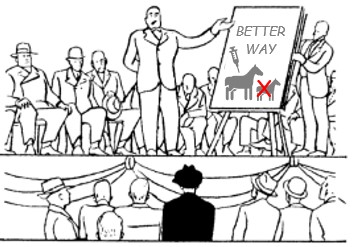
How to Build Support for Wild Horse Roundups

Call a press conference.

Ask the High Priestess of Pesticides and her acolyte in Nevada to join you at the podium, one on your right and one on your left.

Announce that you’ve decided to get rid of the herd with PZP.

Better Way 10-25-23

A sigh of relief will go up from their followers.

Tell the press you need assistance from NGOs.

Let your guests step forward to pledge their support.

Tell the public you want healthy horses on healthy rangelands.

Tell the ranchers (privately) that the herd will implode in five years as the birth rate sinks irreversibly below the death rate.

Point to Assateague Island as an example of what can be achieved if they would just be patient.

Lahontan Roundup in the Works?

A new project was opened in ePlanning on December 6 but no documents were posted.

The scoping period would run from December 11 to January 10.

The project was placed under Rangeland Management, not Wild Horses and Burros.

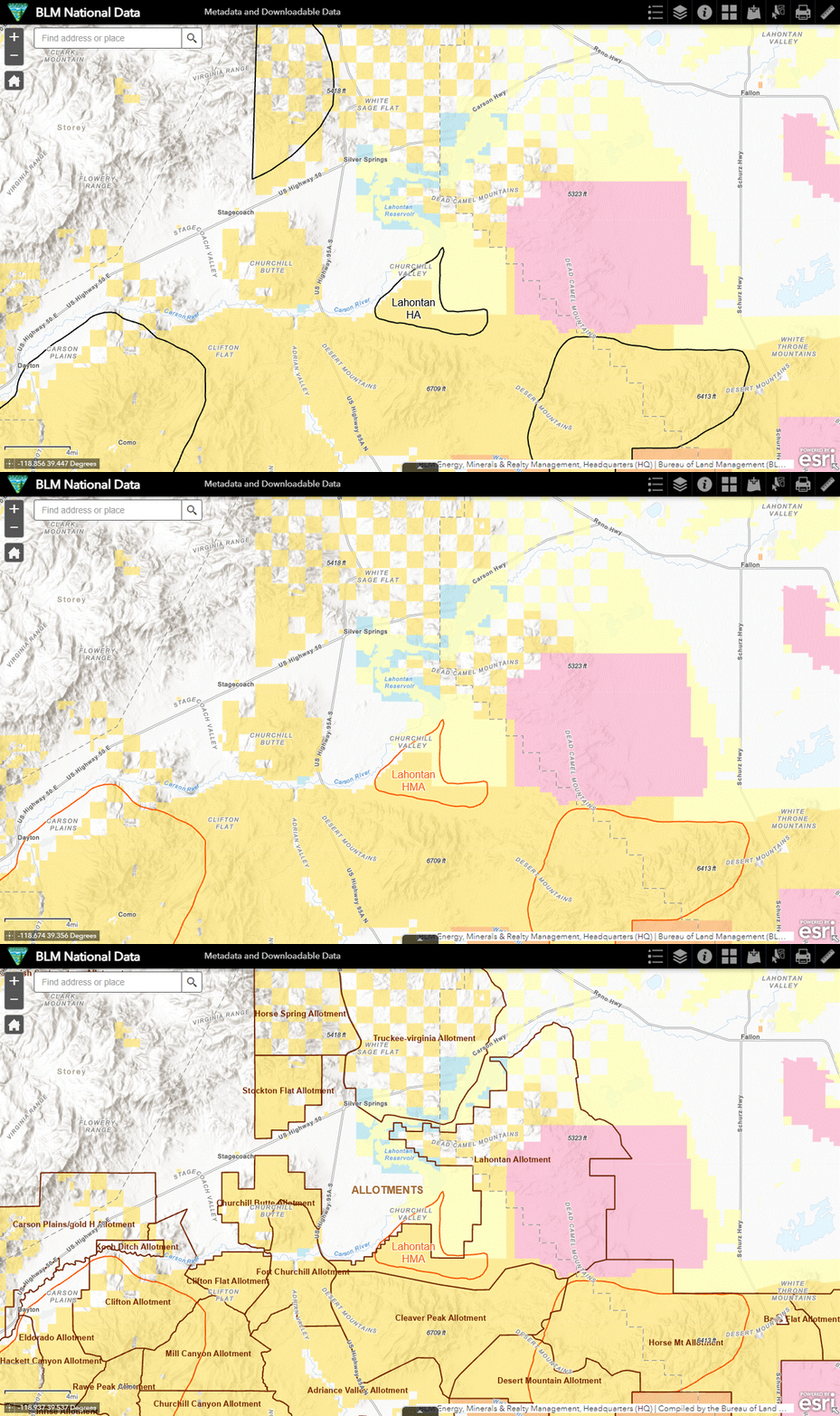
The HMA covers 9,578 total acres near Silver Springs, NV, including 6,937 public acres, and has an AML of ten.

The National Data Viewer shows most of the acreage in the Lahontan Allotment but the portion beyond is on BOR land.

The 2024 population dataset puts the herd size at 353.

Lahontan HMA with Allotments 12-08-24

Devil’s Garden Roundup Over?

Aerial operations concluded on November 30 according to the gather page but the status of bait trapping was not provided.

No updates have been posted since.

The capture total was 341 with three deaths.

The number of horses shipped was not specified.

The number of unaccounted-for animals is not known.

There were no plans to treat any of the mares with fertility control pesticides and return them to the range.

The roundup liberated 4,092 AUMs per year, assuming all horses were removed, giving new hope to the Devil’s Garden permittees.

RELATED: Seventh Annual Devil’s Garden Roundup Announced.

Pesticides, Not Fences, Greatest Threat to Virginia Range Herd

Water may soon be harder to find, thanks to the NDA fencing project, but foals will be even harder, thanks to the advocates.

How many of the protesters in this report by KRNV News are field workers with the Campaign Against America’s Wild Horses or supporters thereof?

They claim to be protecting the horses but they’re getting rid of as many as possible with pesticide-laced darts, a process known as mass sterilization.

RELATED: NDA Sitting on Fence After Yesterday’s BOA Meeting?

NDA Sitting on Fence After Yesterday’s BOA Meeting?

It’s not evident in this report by KOLO News.

Although they heard comments in opposition to the Washoe Lake fencing project, they are unlikely to change course.

After all, the man at the top is a public-lands rancher.

You can’t be telling the American people that public lands in the western U.S. can only support one wild horse per thousand acres when the Virginia Range is carrying ten.

RELATED: NDA Posts Public Comments About Washoe Lake Fence.

DOGE Should Eliminate Wild Horse and Burro Program?

The biggest threat to those animals comes from the bureaucracy charged with protecting them according to a December 7 opinion piece in Townhall.

WARNING: The article has been tainted with links to the Campaign Against America’s Wild Horses and the Property and Environment Research Center.

The approach seems reasonable.  If you’re trying to reduce government waste, go after the programs that aren’t fulfilling their mandates.

But you can’t limit your analysis to things on the surface.  The Wild Horse and Burro Program is a grazing program ancillary.

This is where conservatives will go all wobbly.

You don’t expect us to take those ranchers off the public lands?

Yeah we do.  They’re a shining example of government dependence and redistribution of wealth.

Confine them to their base properties in a year-round off season and let them pay the going rate to feed their animals.

The problem is not the bureaucracy charged with protecting the horses and burros, it’s the special interests that have co-opted the bureaucracy charged with protecting them.

They have invaded the agency the same way cancer invades cells.

RELATED: What Are Musk and Ramaswamy Being Told About Wild Horses?

Side Trips While in SacTown for WHBAB Meeting

Forget about Napa and Sonoma.  The best time to visit those wineries was in the 70s.

Same for the Bay Area.

Instead, drop by a nearby Walmart and try to buy socks and underwear without calling an attendant.  You can’t, they’re behind glass doors.

Go to a Home Depot and see how many items are in locked cages.

Try to buy a gas trimmer or chainsaw.  You can’t, they’re banned.  Still available in Reno, a few hours to the east.

Check out the prices at Safeway.

While at Walmart and Home Depot, you might not notice the fastest shrinking demographic in the state—white folks.

This is what happens when you put liberals in charge.

Homes in established neighborhoods are well above $1 million.  For real sticker shock, try North Bay or South Bay.

And the traffic.  You are free to move about the area from 10:00 AM to 2:00 PM.

On the bright side, Davis is only a few miles to the west—if you can get past the Yolo Causeway.

It’s home to the Campaign Against America’s Wild Horses, a leader in nonmotorized removal and fierce opponent of principal use.

Mass Sterilization and Motorized Removal 08-10-24

Unfortunately, their 2022 Form 990, the most recent posted by the IRS, only gives a PO Box, not a street address.

Maybe they’ll have an open house or similar function.  It’s a great opportunity to build rapport with the bureaucrats and ranchers while maintaining the illusion of support for America’s wild horses.

RELATED: Next WHBAB Meeting Set for Early January.

UPDATE: The Douglas County Assessor gives the address as 216 F St #131.  Refer to APN 1322-00-002-067, one of the parcels in the land trust.

Murderer’s Creek Roundup, Day 7

The incident started on November 29.  Results through December 5:

  • Scope: Murderer’s Creek HMA, WHT
  • Target: Wild horses
  • AML: 140
  • Pre-gather population: 650
  • True AML: TBD
  • Type: Emergency
  • Method: Bait
  • Capture goal: 350 – 400
  • Removal goal: 350 – 400
  • Captured: 89, up from 68 on Day 5
  • Shipped: 56, no change from Day 5
  • Released: None
  • Deaths: 2, no change from Day 5
  • Average daily take: 12.7
  • Unaccounted-for animals: 31
  • Snippet from statute: It is the policy of Congress that wild free-roaming horses and burros shall be protected from capture, branding, harassment, or death
  • Snippet from manual: To protect wild horses and burros from unauthorized capture, branding, harassment or death

The figures above are based on the daily reports.

The death rate is 2.2%.

The capture total includes 31 stallions, 39 mares and 19 foals.

Youngsters represented 21.3% of the animals gathered.

Of the adults, 44.3% were male and 55.7% were female.

Body condition scores were not given.

The location of the trap site was not disclosed.

The name of the contractor was not provided.

There are no plans to treat any of the mares with fertility control pesticides and return them to the range.

No decisions have made regarding the long-term disposition of horses, which means they could be treated or altered in off range holding, including the stallions.

The status of livestock grazing in the burned area is not known.

RELATED: Murderer’s Creek Roundup, Day 5.

Murderers Creek HMA with Allotments 10-24-24