Beware of the wild horse advocates. They are phonies, leaders of the blind, irrelevant.
RELATED: If You Want to Help the Ranchers Give Money to the Advocates.


Western Horse Watchers Association
Exposing the Hypocrisy, Lies and Incompetence of the Wild Horse Advocates
Beware of the wild horse advocates. They are phonies, leaders of the blind, irrelevant.
RELATED: If You Want to Help the Ranchers Give Money to the Advocates.
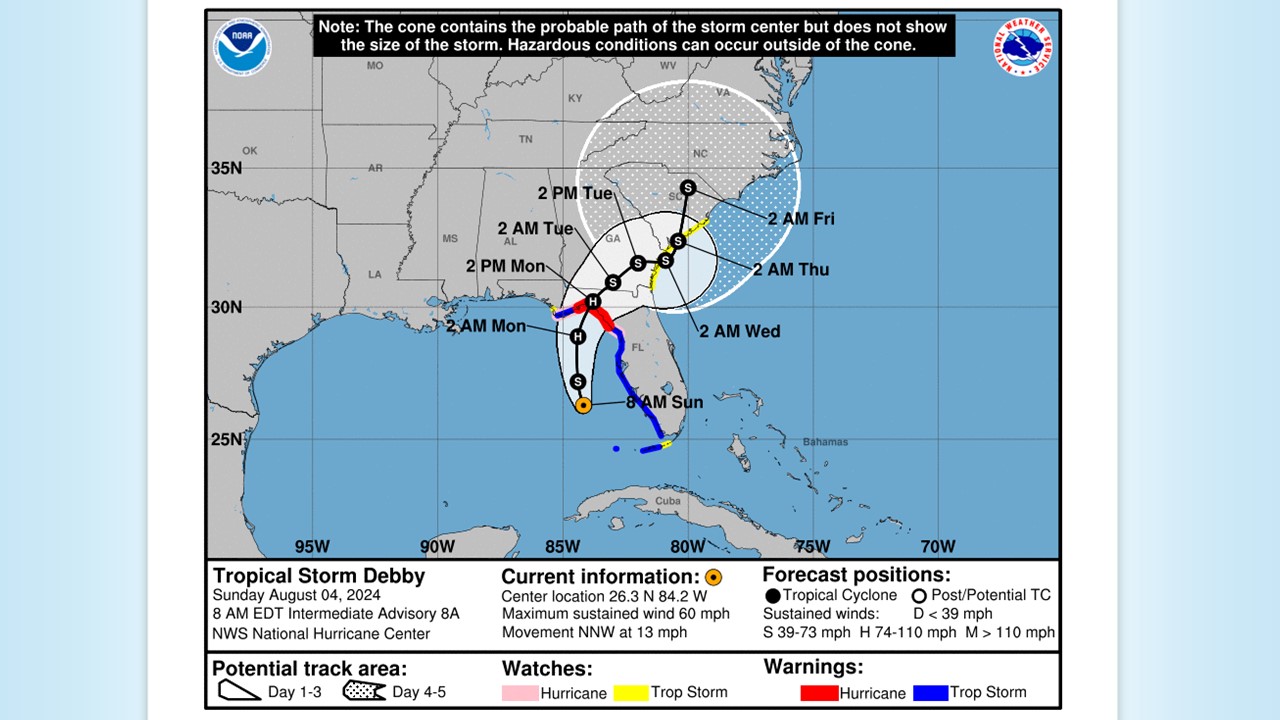
The 8 PM advisory takes the center of the storm across northern Florida tomorrow and into Georgia on Tuesday where it will slow to a crawl.
Assateague Island is still outside the cone but Grayson Highlands is not.
RELATED: Debby to Drench Banker Horses?

The 8 AM advisory takes the center of the storm into northern Florida where it will stall, bringing double-digit rainfall to some areas.
The Paynes Prairie horses near Gainesville will likely be affected along with the herds at Cumberland Island, Shackleford Banks and Corolla.
Assateague Island is not in the cone but that could change if the storm moves farther up the coast later in the week.
This is their first update since January 3.
The new crop consists of five fillies and four colts.
Sadly, births have not kept up with deaths in recent years.
The darting program was shut off in 2016.
RELATED: If PZP Is Reversible, Why Is the Assateague Herd Still Shrinking?
A report by Montezuma Local News says 36 wild horses have been removed from the park since the process rolled out in 2019.
NPS has not given any updates in almost two years.
An overview by the National Mustang Association of Colorado says the Park Service wants to capture 35 to 40 animals this year.
RELATED: First Batch of Mesa Verde Horses Up for Adoption.
As the Democrat Party becomes more radical, anti-God, anti-life and anti-family, so do the wild horse advocates.
It’s almost as if they’re joined at the hip.
In their transition to full-time pleaders for the public-lands ranchers, they’ve abandoned any pretense of caring for the horses and now peddle mass sterilization as a practical alternative to helicopter roundups.
Their demonstration projects at the Salt River and Virginia Range are not designed to slow population growth but to reverse it.
This can only be accomplished by extensive use of the pesticide, which will result in sterilization of the mares and irreversible decline of the herds.
If signed into law, the Wild Horse and Burro Protection Act of 2023 would ban helicopter roundups and increase demand for alternative methods because it does not change the resource allocations and management priorities that drive the removals.
The advocates would be waiting in the wings to spread the serpent’s venom across the fruited plain, with the ranchers coming out on top in the long run.
Imagine Congress passing a bill that puts your competitors out of business and gives you monopoly control of the industry.
That’s HR 3656.
RELATED: Advocates Double Down on Zonastat Lies.
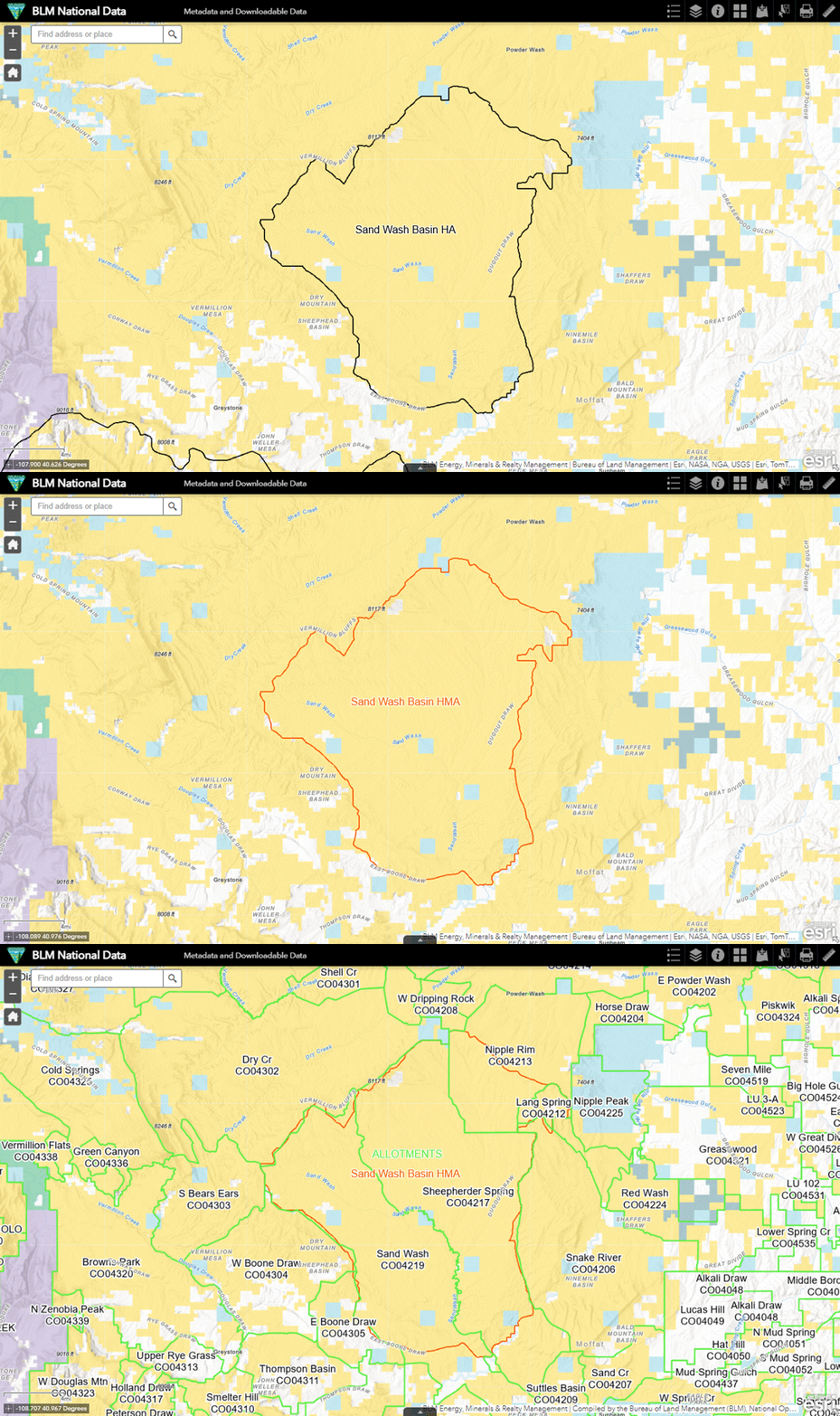
Sand Wash Basin and Little Book Cliffs have been added to the July 31 edition, with start dates of August 15 and September 11, respectively.
Triple B has been dropped, taking the overall capture and removal goals from 20,939 and 19,614 on the June 3 schedule to 18,526 and 17,266.
A preliminary schedule for FY25 has not been published.
A federal judge lifted a temporary restraining order today, allowing the sale of 13 wild horses from the Apache-Sitgreaves National Forest, according to a report by Courthouse News Service.
Advocates with the Salt River Wild Horse Darting Group said the Forest Service is shipping the animals to kill pens in Texas.
RELATED: Salt River Advocates Trying to Block Alpine Horse Removal?
You can ask next time you’re in Patagonia AZ.
In the meantime you can read this review by the Patagonia Regional Times.
The BLM complied with applicable laws in its plan to ship wild horses to the privately owned feedlot according to a story by Bloomberg Law.
The facility held 3,099 wild horses as of July 21, most of them from the East Pershing roundup earlier this year.
It’s not on the June 3 schedule but will begin on or after August 12 according to today’s announcement.
The capture goal is 60. The removal goal was not specified.
The pre-gather population is 409.
Operations will probably not be open to public observation but this is not discussed in the news release.
The destination of captured animals was not given.
A link to the gather stats and daily reports was not provided.
The HMA, located in northwestern Colorado, is subject to permitted grazing.
The permanent trap site is a constant reminder that the horses are not a priority.
The incident will likely raise a few more eyebrows in the state legislature, whose members are already annoyed by the prospects of a roundup at Little Book Cliffs.
UPDATE: It’s on the July 31 schedule.
The incident started on May 31. No activity has been reported since June 28.
An email inquiry sent on July 29 has not been answered.
RELATED: Piute Mountain Roundup, Day 27.
UPDATE: A BLM public affairs specialist said today the operation continues.
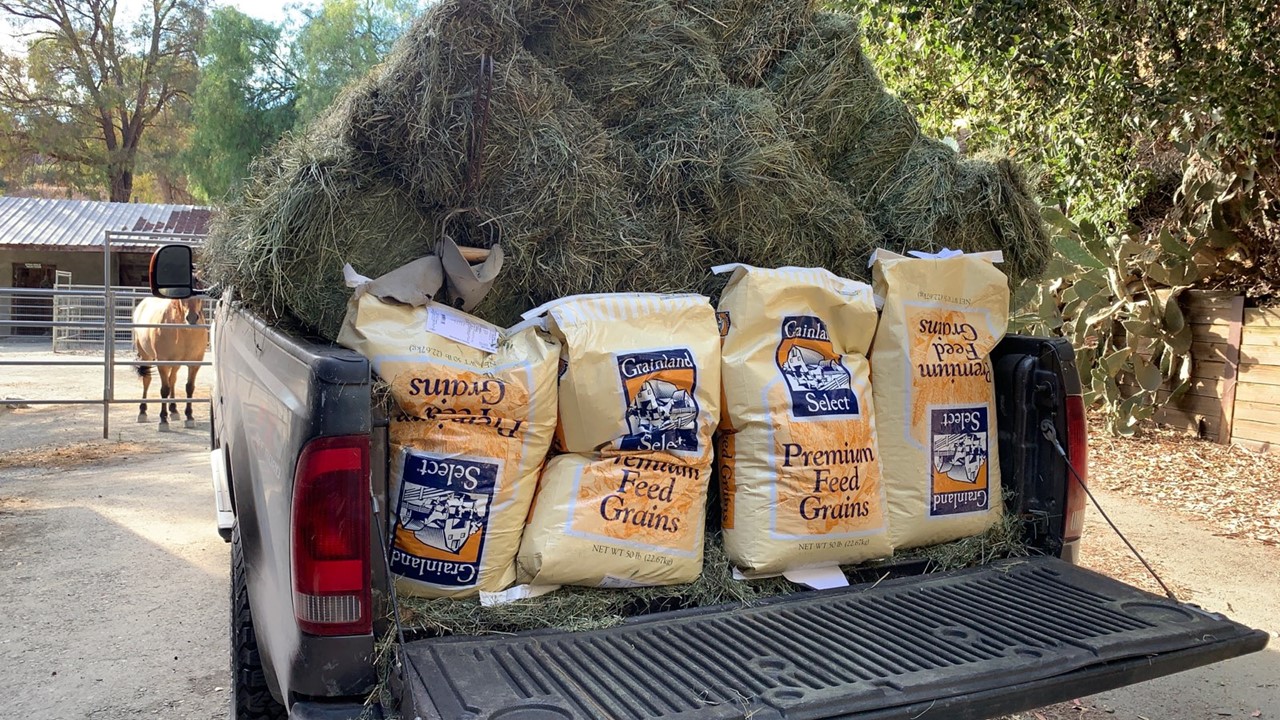
A few years ago twenty bales would fit in the bed of the truck with no room to spare.
But lately there’s space for sacks of grain as shown in the following photo.
Another example of shrinkflation?
They may be getting smaller but they were heavy and the flakes were dense.
Maybe the grower has increased the compaction of his baling machine.
The price on July 31 was $30 per bale, 20 bales minimum, compared to $19 three years ago.
That puts the cost of feed at $150 per AUM assuming five bales per month per horse.
Forage on public lands in the western U.S. sells for $1.35 per AUM.
Now do you see why more and more wild horses are being forced into taxpayer-funded feedlots as more and more livestock occupy their lawful homes?
RELATED: Price of Hay Eases Slightly?
He has everything he needs to grow up into a stallion who will one day produce foals of his own according to the herd manager and author of an article in OBX Today.
The statement is subject to the test of future experience.
The darting program has been shut off for two years but we still don’t know the number of viable mares and if genetic diversity has been compromised.
The announcement follows the death last week of a stallion who was struck by a vehicle.
Demolition is almost complete. The reservoirs are gone and the river has returned to its original channel, exposing 2,200 acres of formerly submerged lands.
A last step in the process is to replant the basins with seeds, shrubs and trees, according to a story by the San Fransisco Chronicle, which has attracted the horses.
The herd has received national attention in recent years as the Wild Horse Fire Brigade.
Their sponsor says they’re benefiting the landscape, not hurting it.
Others disagree, claiming they don’t benefit the region.
The county has an open range policy, meaning the owners of the property must install fencing to keep the animals out.
It’s not clear if that was in the original project scope and if it will force the herd to find a new source of water.
They may not run the Democrat Party but it certainly has its share of them.
Same for the wild horse world.
Can you think of a better demographic from which to recruit and train PZP darters?
Leading the way is the Campaign Against America’s Wild Horses and its army of nitwits.
Allegations of abuse at the Blue Wing Complex may encourage more cat ladies to come out of the closet and become foot soldiers for CAAWH.
They’re a miserable lot, working alongside the legacy contractors to help the bureaucrats achieve their goal of ranching superiority in the lawful homes of wild horses.
RELATED: Foal-Free Friday, Plausible Deniability Edition.

The incident concluded today with 1.305 horses captured, 1,268 shipped, three released and 34 dead.
There were no unaccounted-for animals.
The capture and removal goals were 1,373 and 1,333, respectively.
The death rate was 2.6%.
The average daily take was 52.2.
Body condition scores were not given.
The capture total included 536 stallions, 544 mares and 225 foals.
Youngsters represented 17.2% of the animals captured, consistent with a herd growth rate of 12% per year.
Of the adults, 49.6% were male and 50.4% were female, well within the limits of variation from a random process centered at 50% males / 50% females.
Video of the abuse of a captured horse gave the advocates an opportunity to sell mass sterilization as a practical alternative to helicopter trapping.

The number of horses removed depends on the number returned.
The June 3 schedule indicates that 40 mares will be treated with a fertility control pesticide and be returned to the Complex, leaving open the possibility of another GonaCon crime scene.
As for the burros, 360 were captured, 353 were shipped, none were released and eight died.
More animals were processed than caught, putting the unaccounted-for total at -1.
The capture and removal goals were identical at 356 each.
The death rate was 2.2%.
The average daily take was 14.4.
The capture total included 186 jacks, 152 jennies, and 22 foals.
Youngsters represented 6.1% of the animals captured.
Of the adults, 55% were male and 45% were female.
There were no plans to treat any of the burros with pesticides and return them to the range.
The Complex is subject to permitted grazing. The roundup liberated 17,784 AUMs per year, giving new hope to the Blue Wing permittees.
RELATED: Blue Wing Roundup Announced.
UPDATE: The BLM news release was issued on August 7.
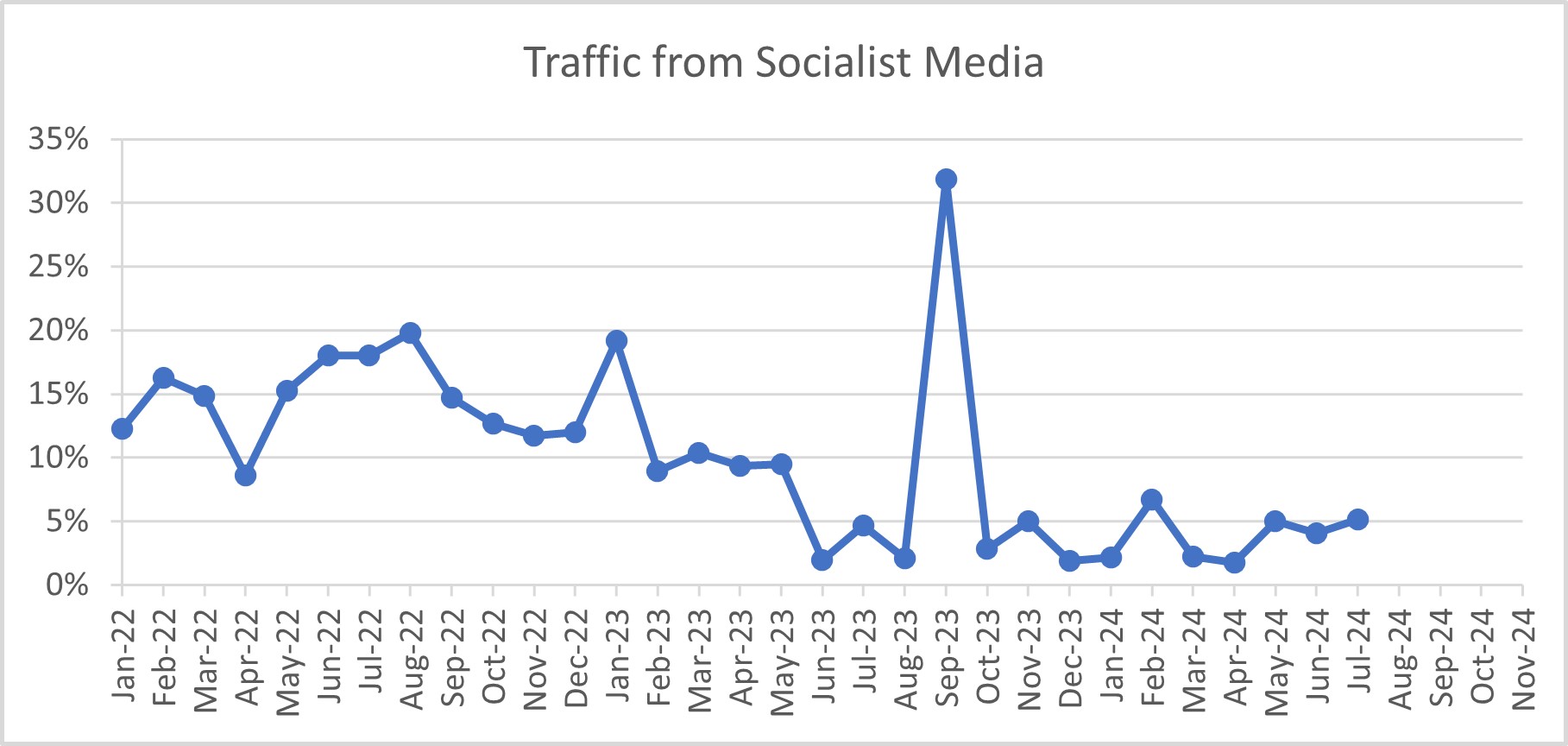
Traffic from Facebook and Twitter accounted for 5.1% of the total during the month, down considerably from the same period two years ago.
Did you know that Project 2025 targets America’s wild horses and burros?
You didn’t hear that from the advocates.
Western Horse Watchers brings you the truth about wild horses, resource management and the Love Triangle on America’s public lands.
RELATED: Socialist Media Update for June 2024.
 Western Horse Watchers Association