
The initiative, announced in 2022 and briefly discussed at the last WHBAB meeting, was acknowledged by the BLM in a blog post dated August 11.
Let’s put the first sentence under the microscope:
Wild horses in the Reveille herd in southern Nevada were among the first to be part of a new initiative from the Bureau of Land Management aimed at expanding the use of fertility control vaccines to slow population growth and protect wild herds from overpopulation.
Like PZP, GonaCon Equine is a pesticide, not a vaccine.
It does not slow population growth, it reverses it. With sufficient use, breeding populations dip well below the minimum specified in the WHB Handbook, allowing death rates to exceed birth rates.
It protects livestock operators, not wild horses.
The article said 29 mares had been inhibited while the gather page says 27.
It includes a photo of a mare in a chute receiving a booster dose prior to release.
The final paragraph suggests it was applied 30 days after the primer and is expected to prevent pregnancy for four to five years.
Unfortunately, this is a violation of federal law. A 2017 labeling amendment that dropped the RUP designation extended the interval to 90 days.

The person applying the product is not wearing the proper PPE, another violation.
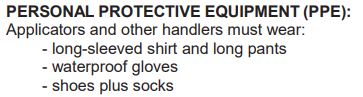
Is it by stupidity or brazenness that such images are released for public consumption?
The Hog Creek roundup will likely be the next installment of CTR, which, in the interest of accuracy, is really catch-treat-release-a-small-subset-of-the-original-herd.
Public acceptance of these poisons, and the concept of nonmotorized removal, has been driven mostly by propaganda from the wild horse advocates, especially the Campaign Against America’s Wild Horses, an outspoken proponent of PZP.
NOTE: The August 2 report at the bottom of the gather page confirms the treatment interval was not 90 days.

RELATED: Reveille HMA Now Crime Scene?

 Western Horse Watchers Association