
Go back to the report by KLAS News about the July 13 incident at the Antelope roundup and listen to the advocate’s remarks at 1:58.
But if you’re going to remove ’em, remove ’em in the fall, and do it humanely.
Does that sound like a voice for the horses or a propagandist for the ranchers?
Why would you want to remove them? Where are her figures for acreage, forage production and their allocation among the various users?
In most circles, “humanely” is a code word for “poisoning the mares with ovary-killing pesticides.” Is that what she means?
Or maybe she wants them forcibly removed from their lawful homes by cowboys, with a few foals body-slammed along the way.
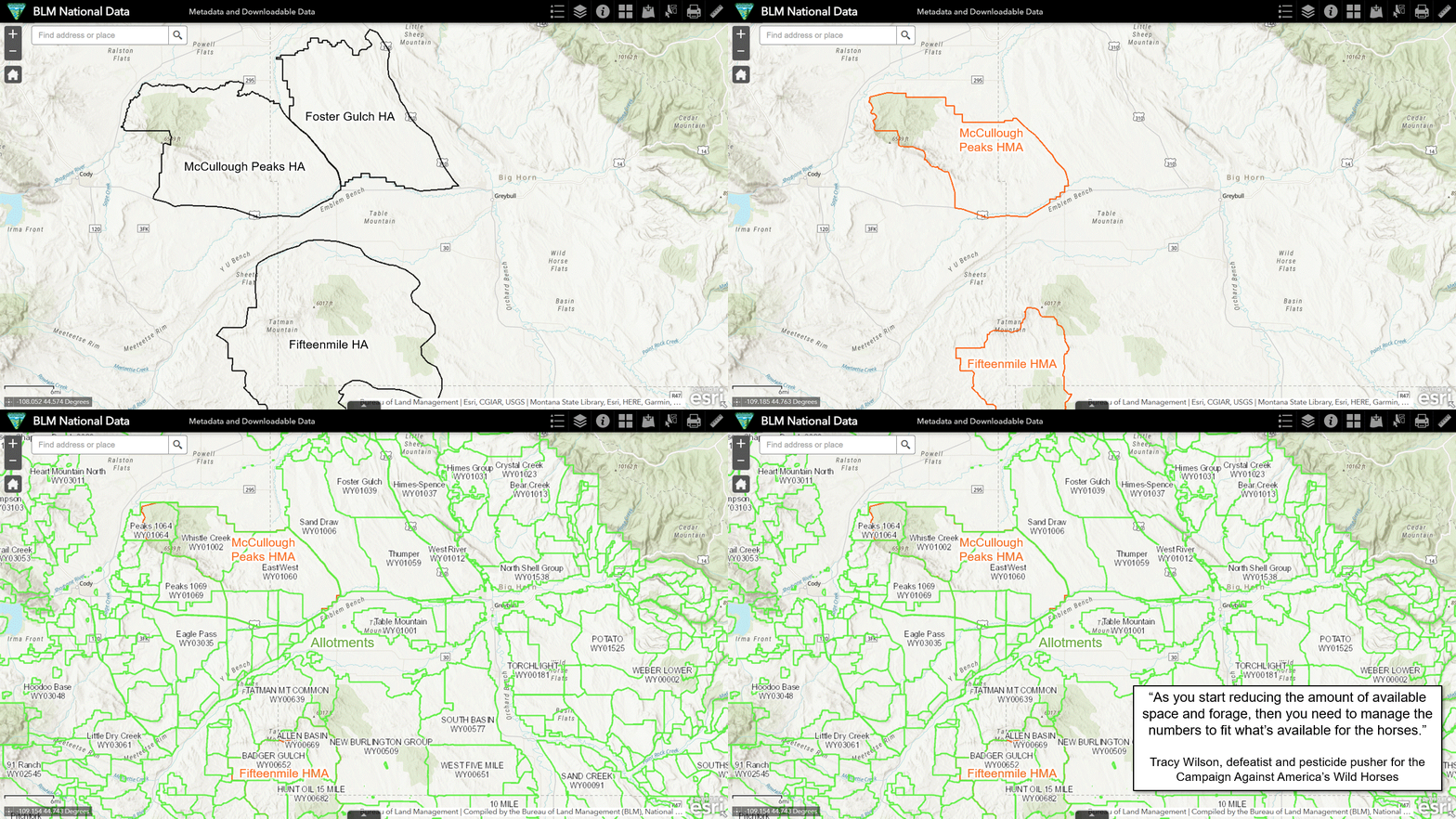
The new management plan for McCullough Peaks illustrates the prevailing attitude among the advocates: “You need to manage the numbers to fit what’s available for the horses.”
That’s how they respond to shrinking acreage and loss of food and water to the public-lands ranchers.
It’s not unique to the HMA, the pattern has been occurring across the western U.S. for 50 years.
The advocates have no understanding of processes, cause and effect, problem identification and problem solving.
They’re as dull as the livestock they’re trying to protect.
RELATED: Draft EA for McCullough Pest Control Out for Review.
 Western Horse Watchers Association