
On the Outer Banks of North Carolina (Corolla).
Month: June 2018
Oregon HMA Population
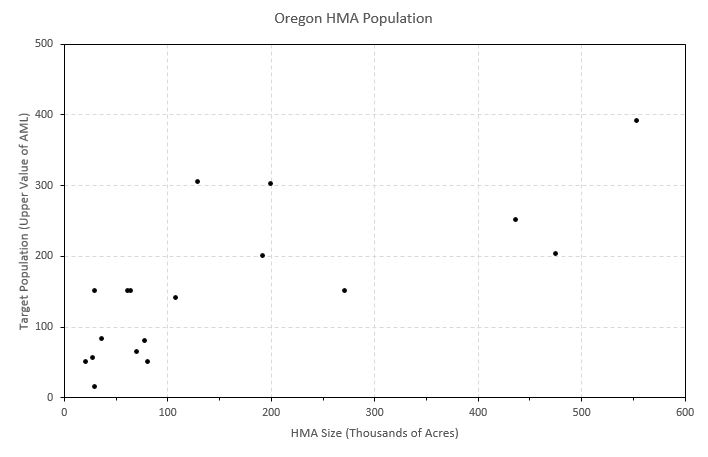
The chart below shows the population target for HMAs in Oregon as a function of HMA size.
The chart yields three conclusions:
- Almost two thirds of the HMAs are smaller than 100,000 acres
- Most of the AMLs are 200 animals or less
- AMLs vary with HMA size but not proportionately
Imagine a line starting at (0, 0) and extending diagonally to the right. The average size of HMAs less than 100,00 acres is about 50,000 acres. The average AML for that subgroup is roughly 85 animals. Therefore, line would pass through (50, 85).
Now let x = 500. The proportional AML should be ten times larger, y = 10 × 85 = 850, establishing another point at (500, 850). The three HMAs close to x = 500 have AMLs far less than 850.
This leads to the topic of population density (subject of next post in the series). If you’re expecting to find some of the smaller densities (animals per thousand acres) on the larger HMAs, you’d be right. That is the same pattern observed in Nevada.
RELATED: Oregon HMA Stats.
Beauty Matters
Wild Horses of the Washoe by Donald Cool.
They Run the Show
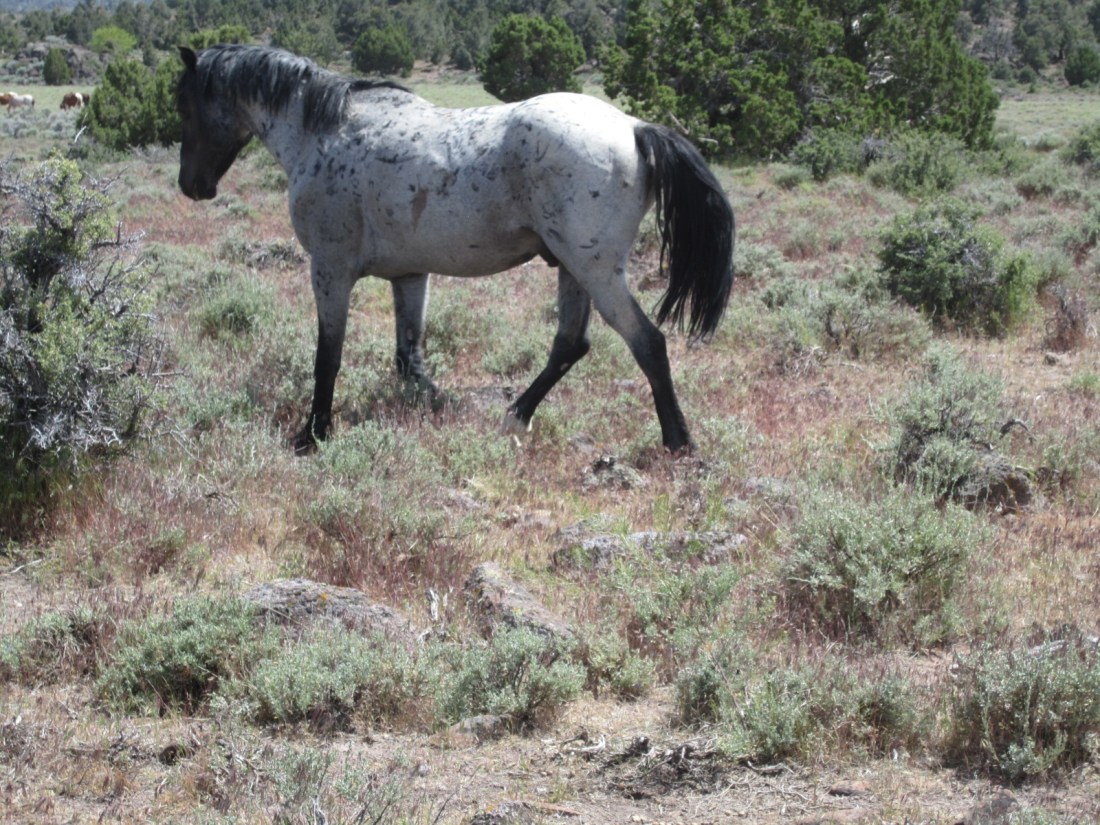
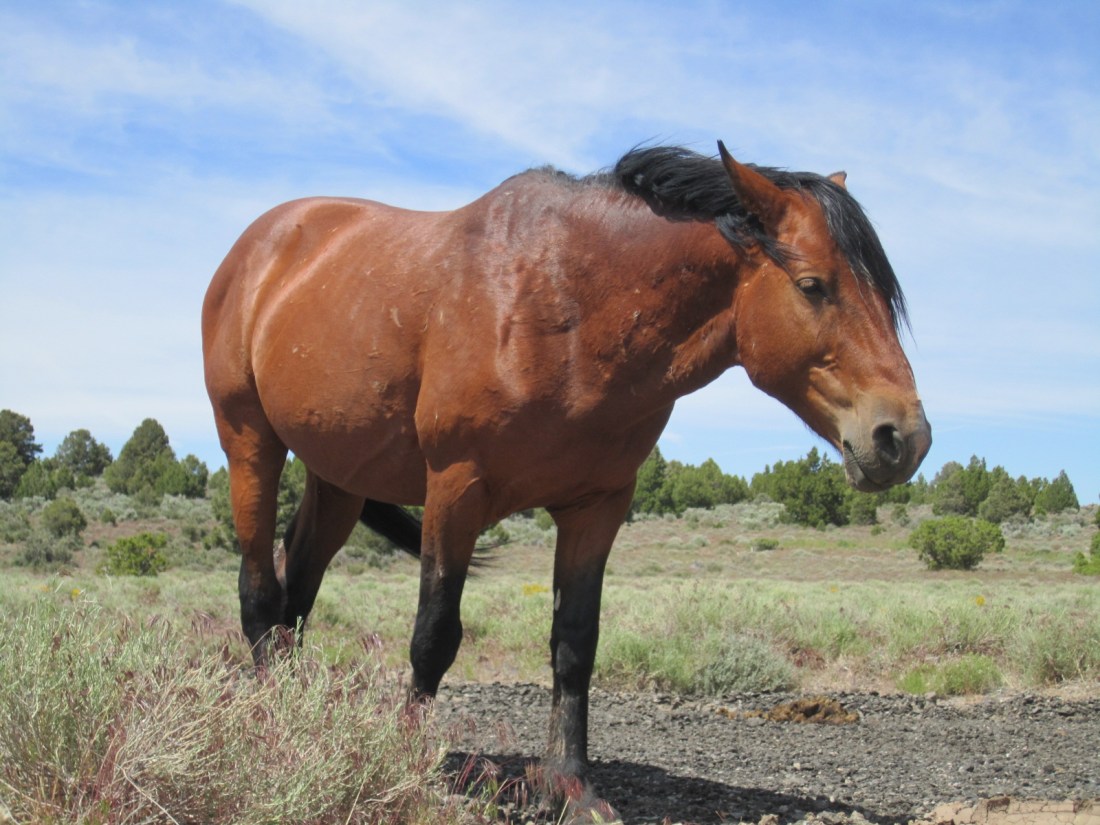
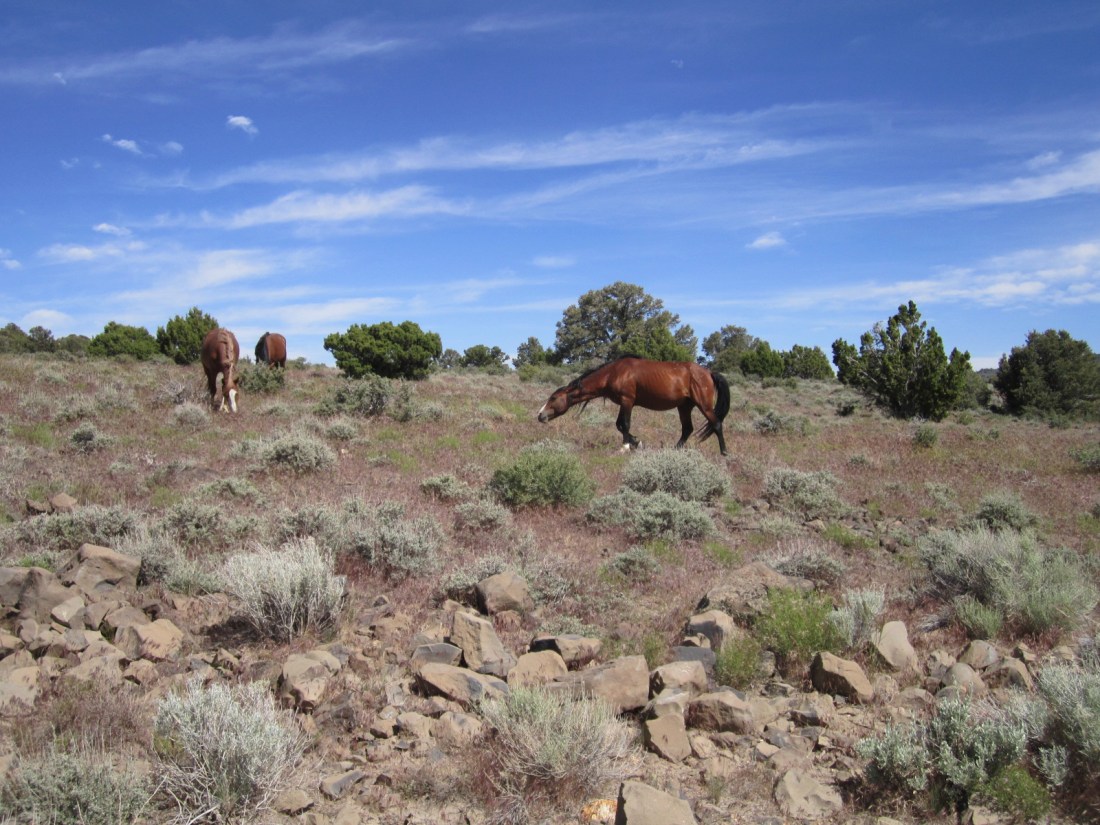
Band stallions on the Virginia Range, 06/15/18. Always fighting off young upstart bachelors who try to steal their mares. You won’t see them pushed off their food by ‘lead mares.’ Sorry ladies.
Eventually, they’ll be overpowered by other stallions and will transition to more-or-less solitary lives in pasture.
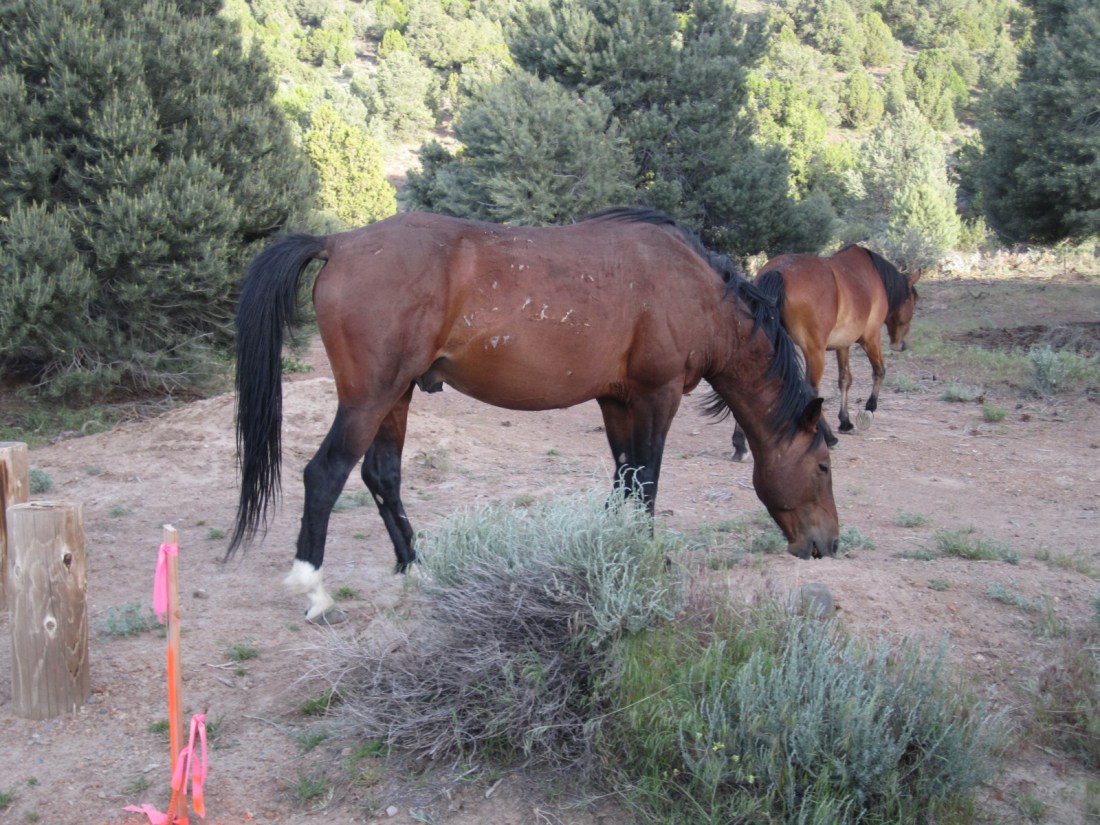
BLM to Gather Horses on Goshute HMA Starting Next Week
BLM plans to remove 125 wild horses from the Goshute HMA beginning 06/25/18, due to public safety concerns and private land issues. Refer to this news release dated 06/22/18.
The method of capture will be bait traps. Horses not returned to the range will be transported to the Indian Lakes Off-Range Corrals in Fallon, NV.
The HMA lies in northeastern Nevada, near I-80 and the Utah border, and covers an area of 267,277 acres (418 square miles).
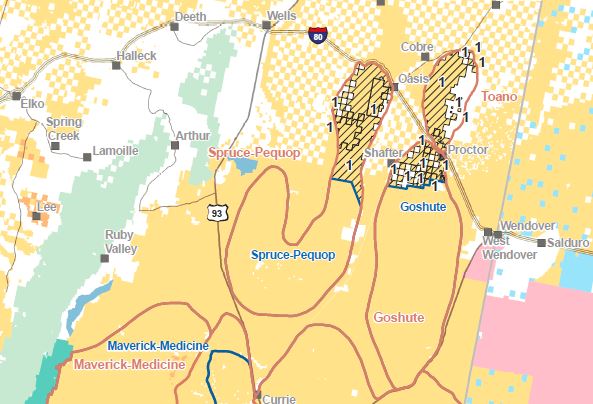
The population density at the upper end of the AML is 0.46 horses per thousand acres, almost nothing. Domestic livestock are present on the HMA, along with wildlife such as deer and antelope.
WHB in Missoula, MT This Weekend
News report from KTVH (NBC affiliate) in Helena, MT. Bad horses aren’t born, they’re made.
RELATED: BLM Event in Missoula, MT to Feature WHB.
Good Times Were Had by All
They Know Where Their Feet Are
Trail ride into the Grand Canyon, south rim. H/T West Taylor.
R3C Adoption Results Posted, Napa Mustang Days
Saddle-started horses for $300 to $500. Can’t beat that. H/T Friends of R3C.
Advocates Bringing Hay to Salt River Horses
More fallout from the drought in southwestern U.S. See this story dated 06/21/18 in AZ Family dot com (CBS affiliate in Phoenix).
UPDATE #1: See also this report, posted 06/22/18 on KJZZ 91.5 FM, Tempe, AZ.
UPDATE #2: And this report from FOX 10 in Phoenix, AZ, 06/22/18. Includes video.
UPDATE #3: Added video.
This Is the Lord’s Doing, and It Is Wonderful In Our Eyes
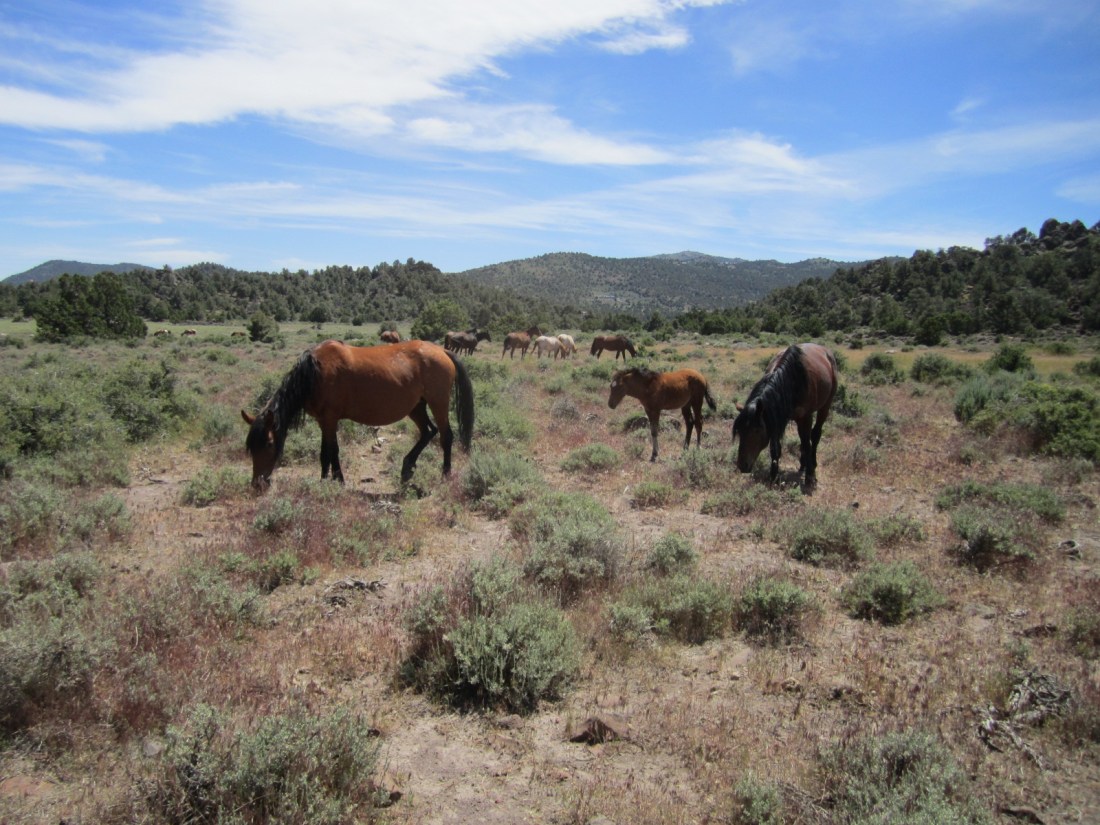
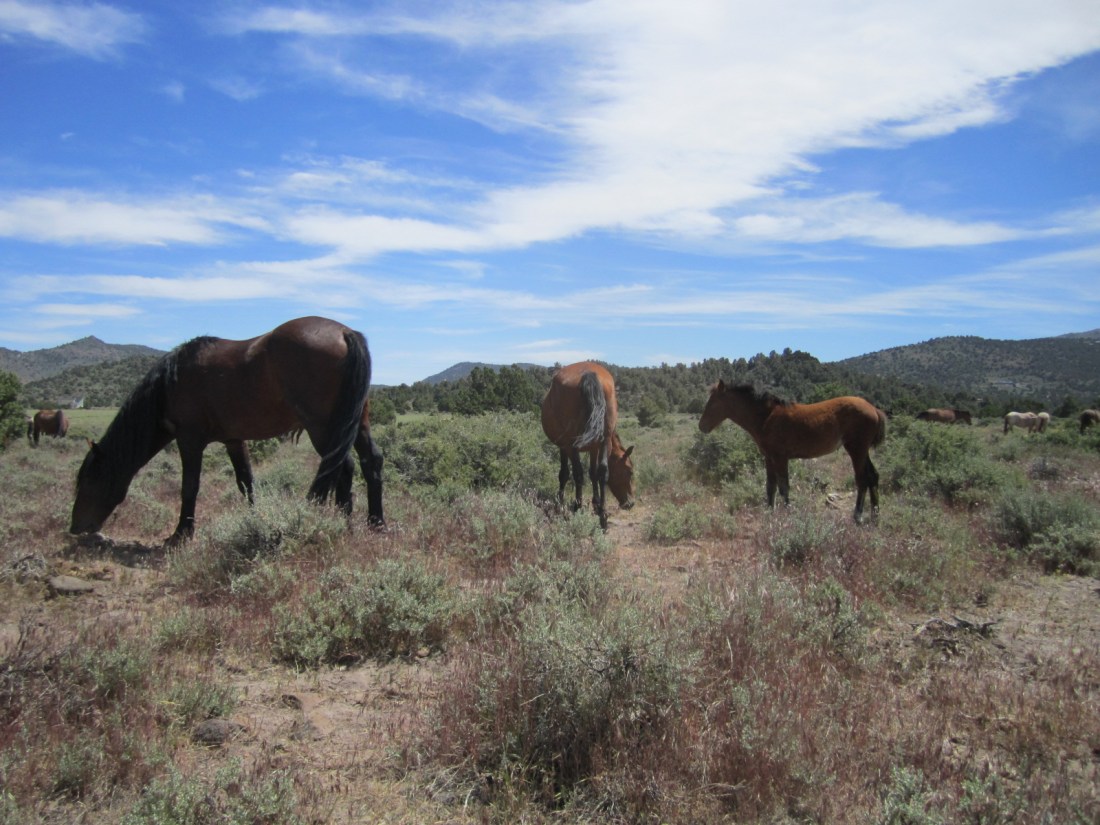
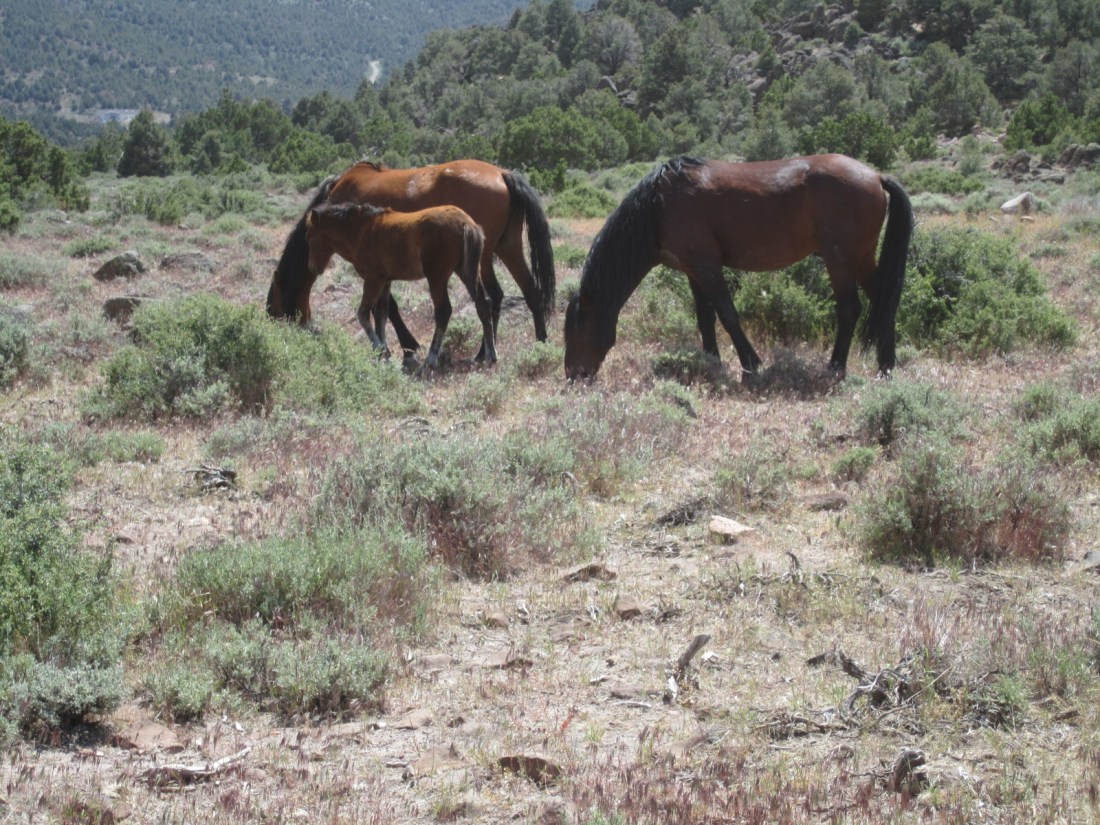
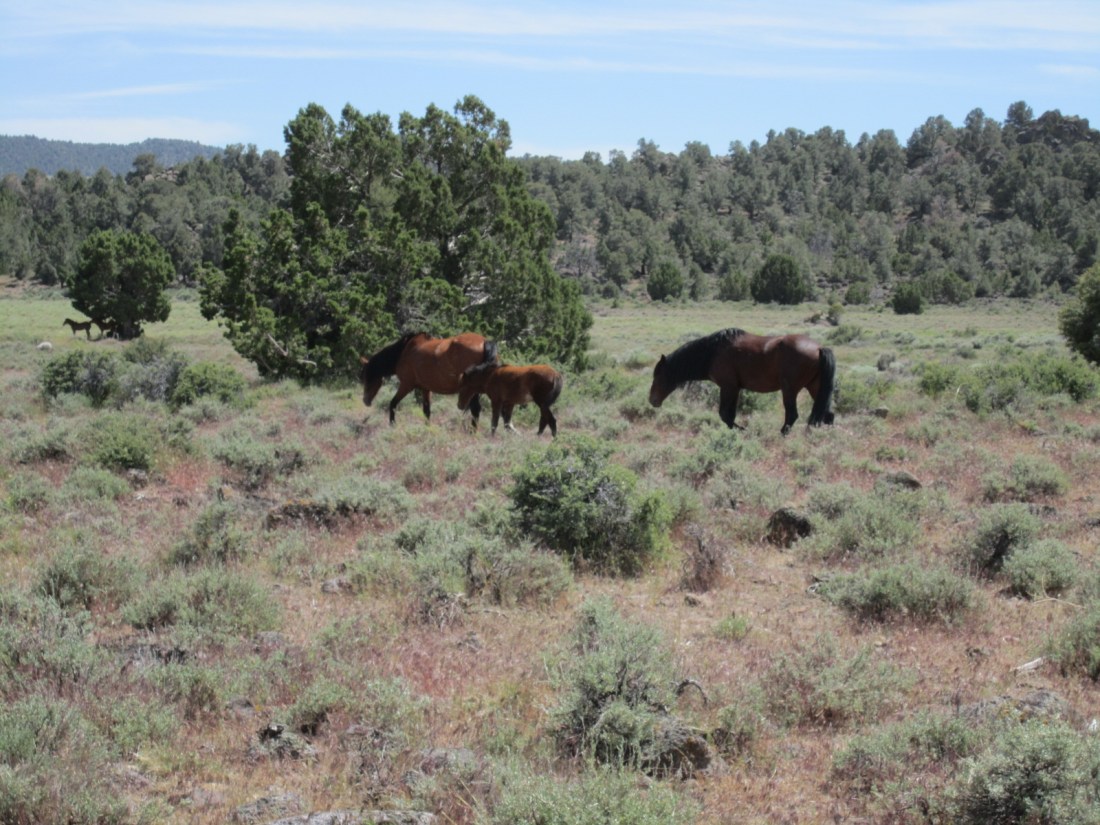
New band on the Virginia Range, 06/15/18. Looks like mom (on the left in first photo) has another one on the way.
Many of the so-called advocates, along with the wild horse haters, say this is wrong, it has to be stopped…that the horses are overpopulated and the land can’t sustain them.
Do you see any evidence of that in the photos that have rolled out this week?
Keep in mind that the Virginia Range has a population density of roughly ten horses per thousand acres, compared to a population density of one horse per thousand acres on your average HMA.
Flashback Friday
Two from Victoria Jackson.
Then.
Now.
Wild Horses of the Virginia Range, Part 3
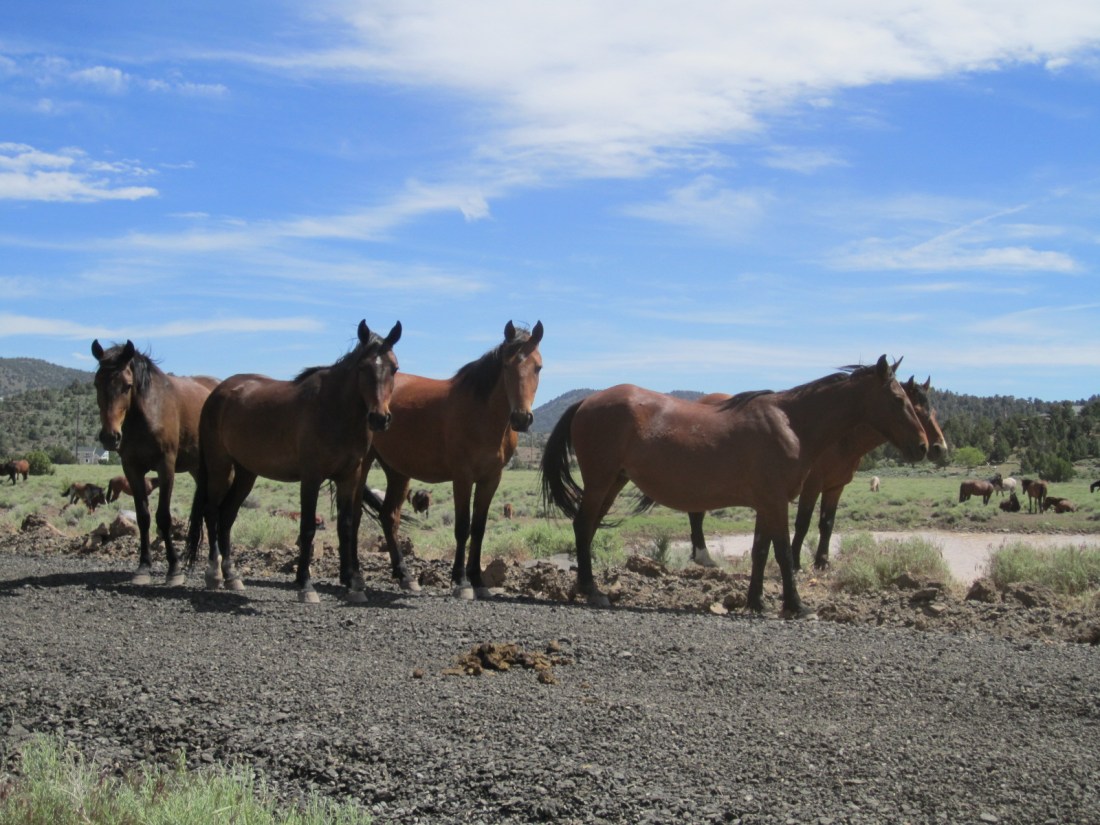
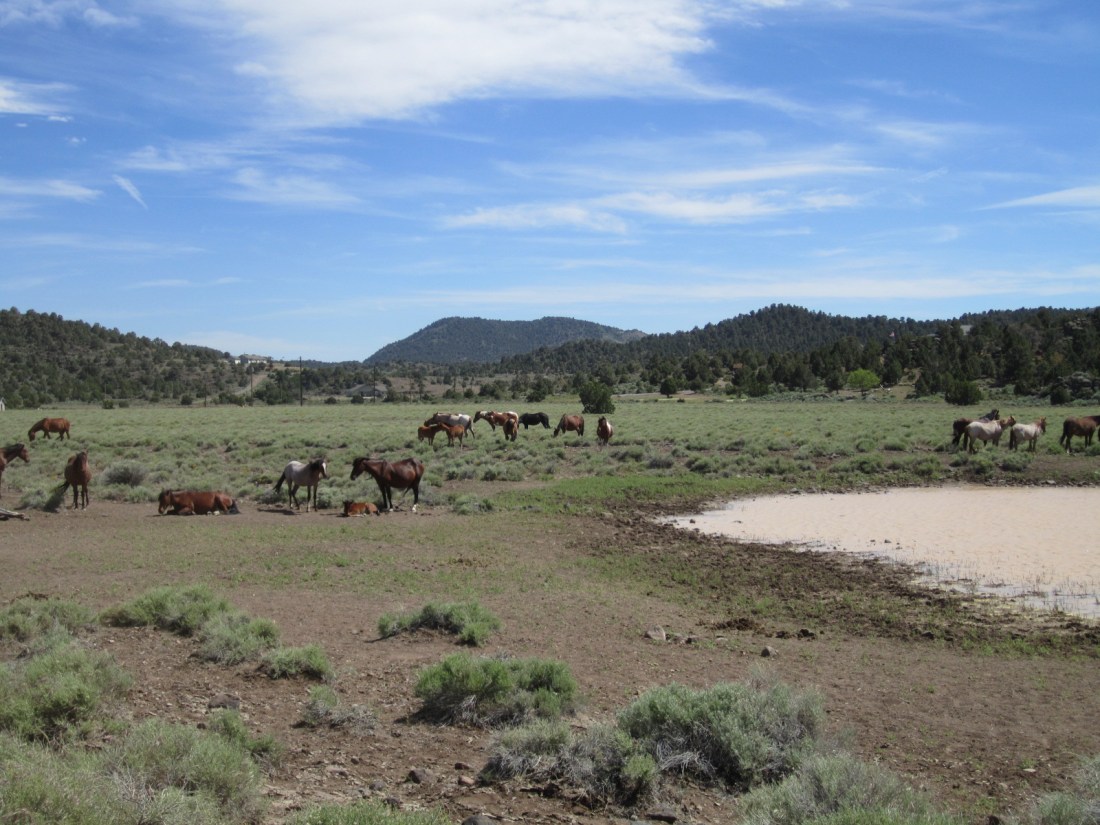
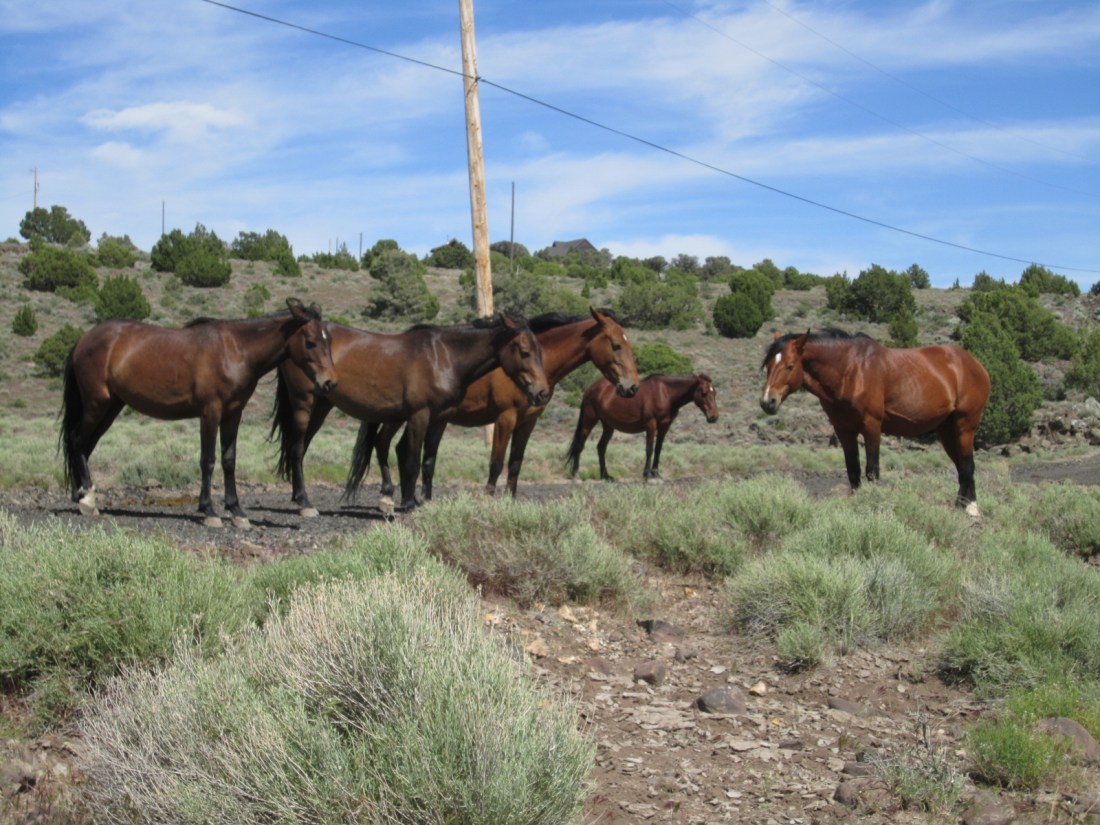
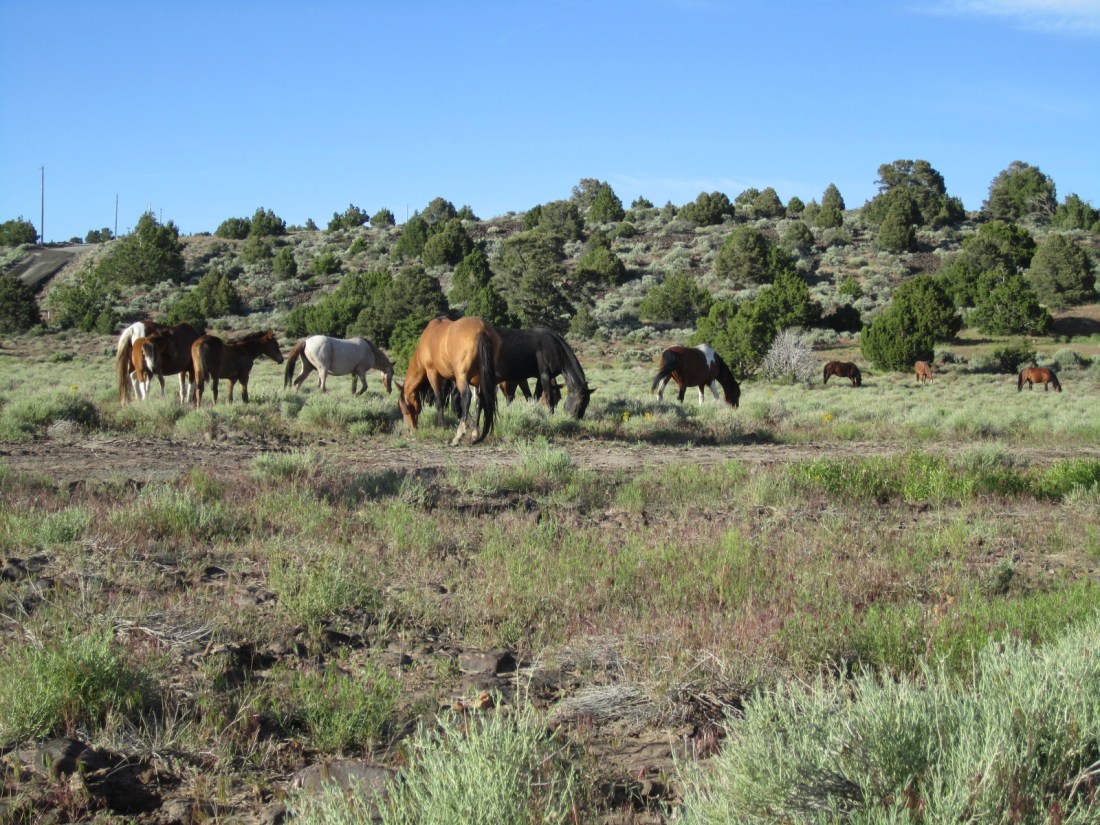
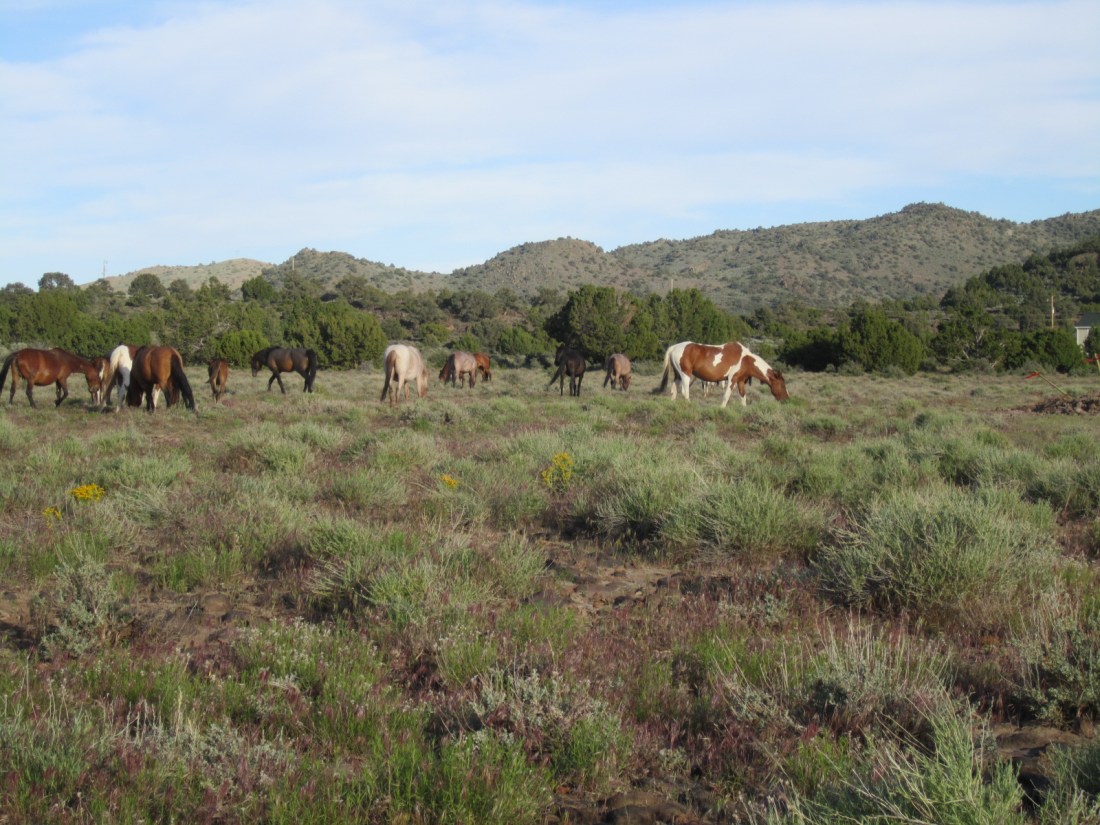
Last set of photos from 06/15/18. These guys spent most of the afternoon near the pond but decided to move on to other pastures around 6:00 pm.
The pond is seasonal and will dry up in another month or so, typical for the Nevada high desert. The horses were not very interested in drinking from it, only saw one go in it.


BLM Event in Missoula, MT to Feature WHB
Fifteen to twenty halter-trained mustangs, along with three to five saddle-started mustangs will be available for adoption at the Missoula County Fairgrounds June 22-23, 2018, according to a BLM news release dated 06/20/18. Fifty untouched horses and ten untouched burros will also be available.
Wild horse & burro posters will not be available at the event.

Advocates Hauling Water to Heber WHT

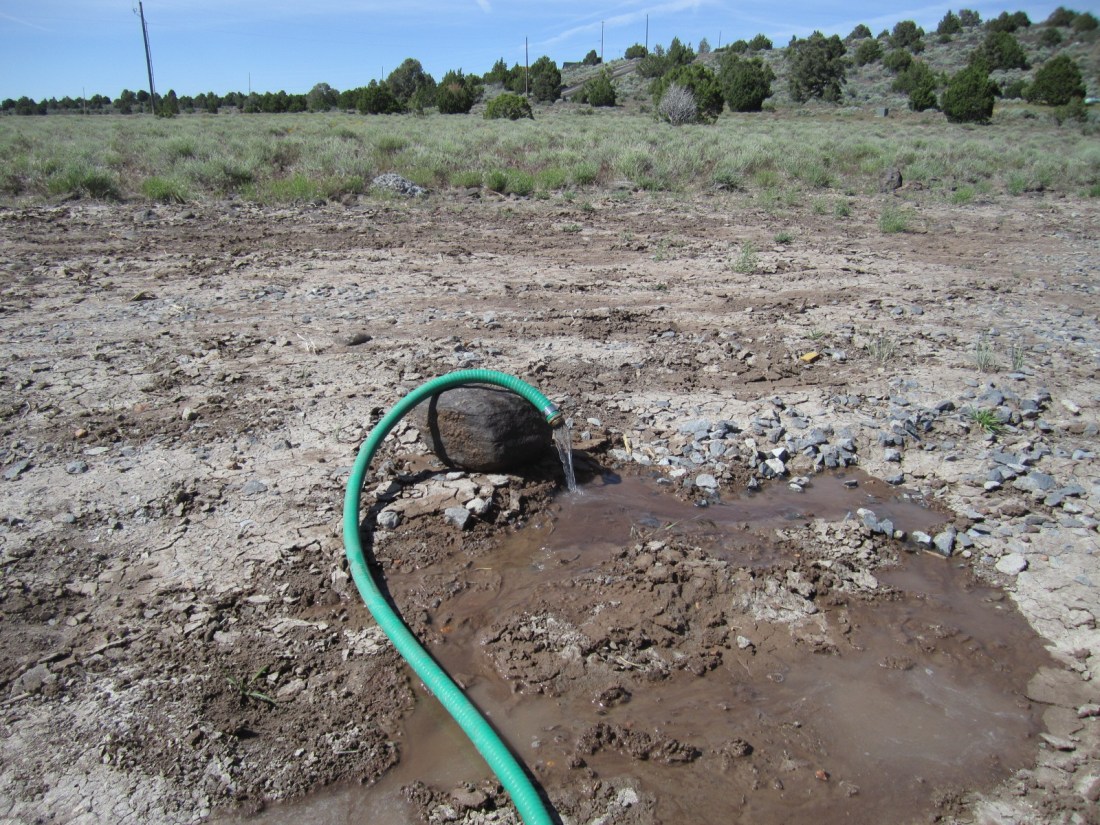
Rural Water Systems – Startup
Flushing new system a few times to remove sediment. Water was a bit cloudy initially, but cleared up after four or five cycles (drain tanks until pressure hits 40 psi, pump comes on and refills tanks, repeat).
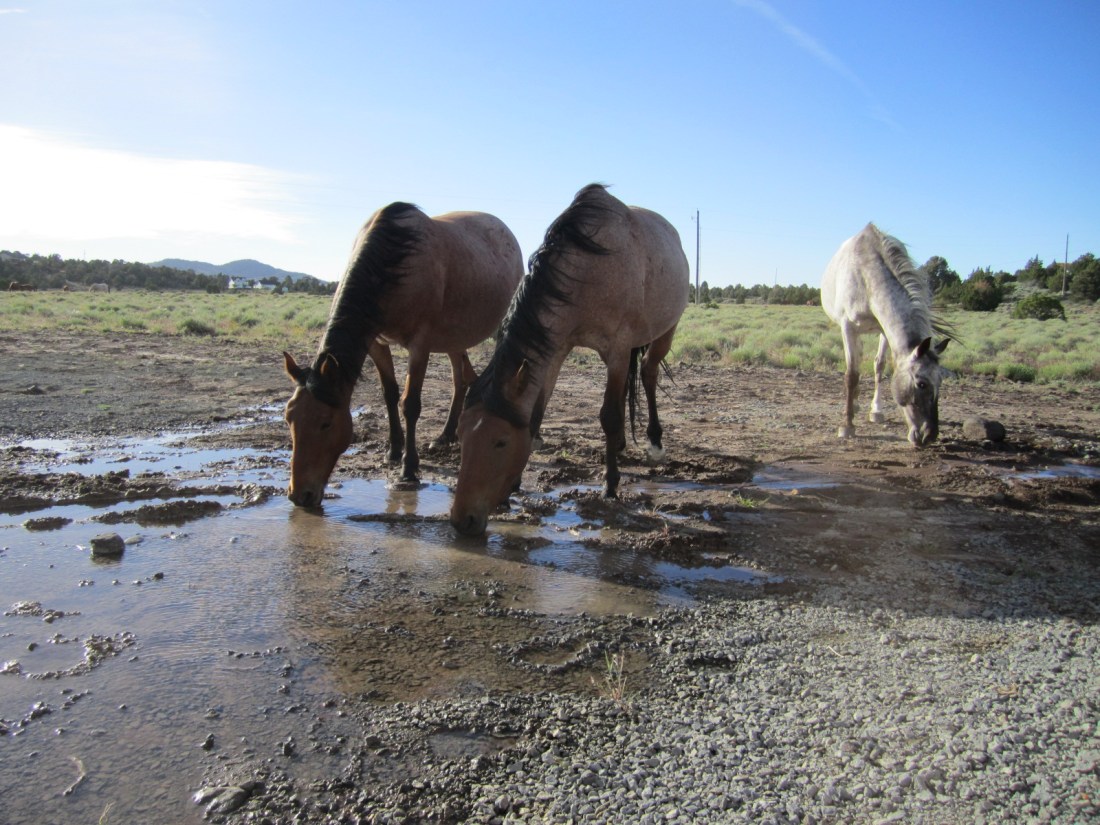
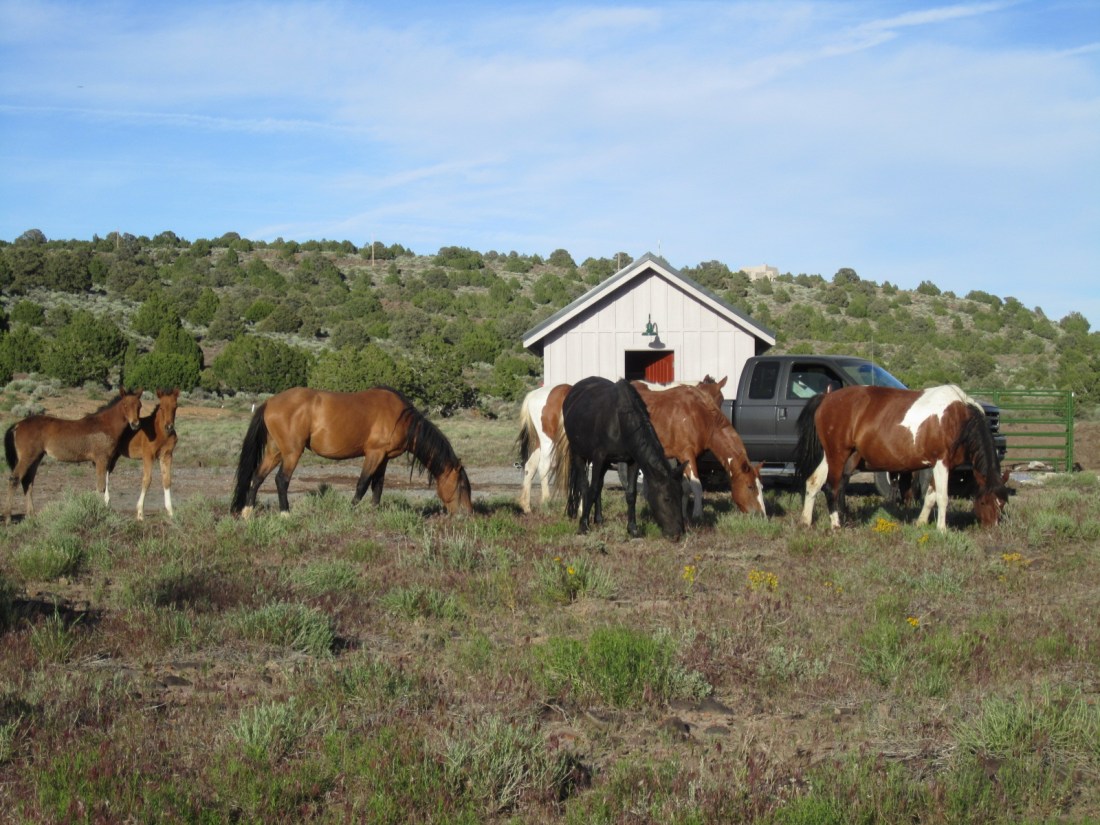
Some Virginia Range mustangs came by to check it out…and they liked it! Photos taken 06/15/18.

Yakama Nation, Champions of the Horse
Video from 2018 Yakama Nation Treaty Days rodeo in Washington state. This is what happens to the wild ones they don’t send to slaughter? Language warning.
Wild Horses of the Virginia Range, Part 2
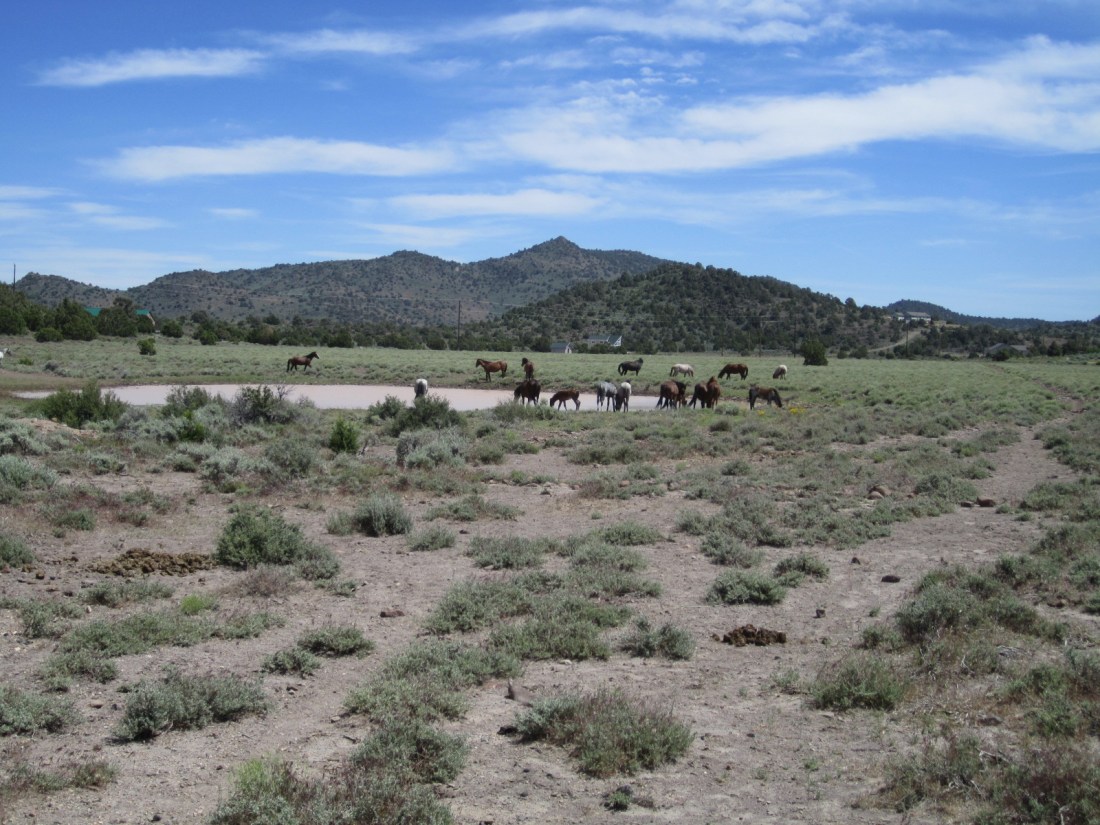
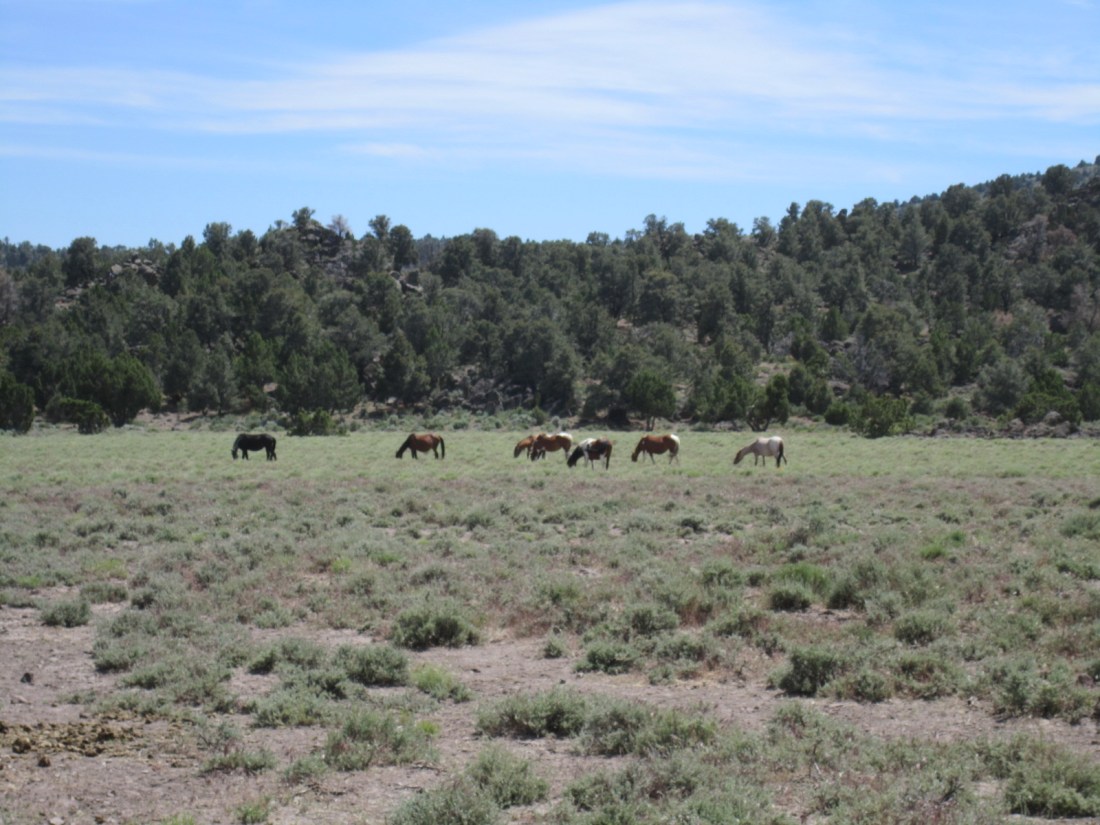
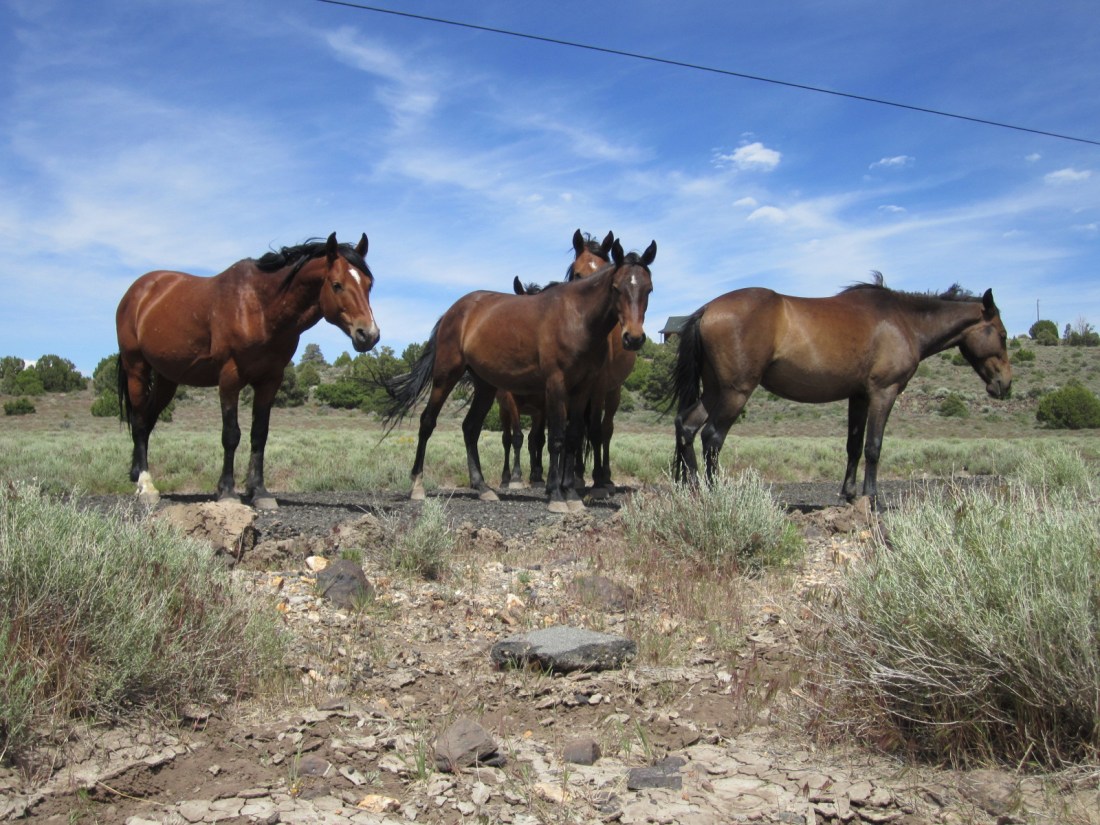
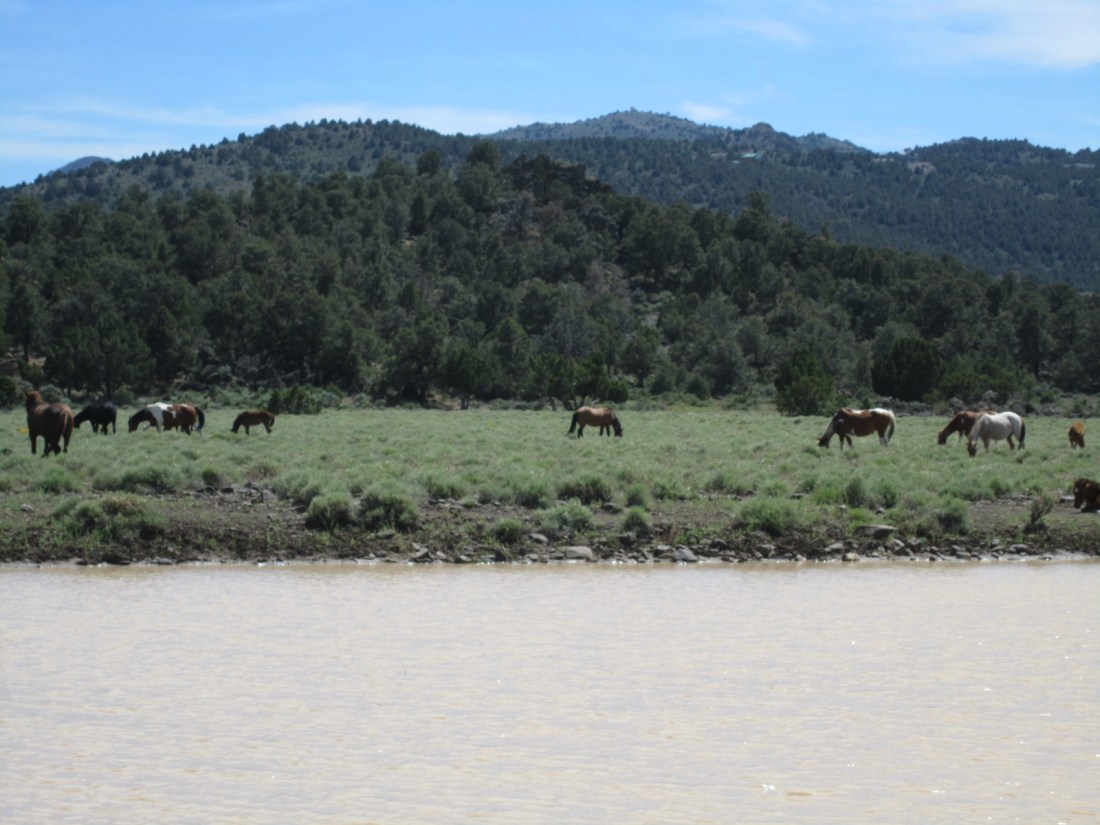
More photos from 06/15/18. Elevation 6500 feet. Wind out of the west with a temperature of 70 deg F.
The Virginia Range mustangs roam an area east of Reno, NV bounded by I-80 on the north, Hwy 395 on the west, Hwy 50 on the south and Hwy 95 on the east.



BLM Seeks Additional Off-Range Pastures for WHB
Refer to this news release dated 06/20/18. Pastures must be able to accommodate at least 100 animals and must be located in Colorado, Kansas, Montana, Oklahoma or Wyoming. They must provide a free-roaming environment and allow for public visitation and viewing.
The action is justified by the number of wild horses and burros on western rangelands vis-à-vis ‘other legally mandated land uses’ [such as, ahem, cough-cough, livestock grazing].
Bidders will be expected to care for the animals for periods of up to ten years. Proposals are due 07/10/18.
What Is the Mustang Roll?
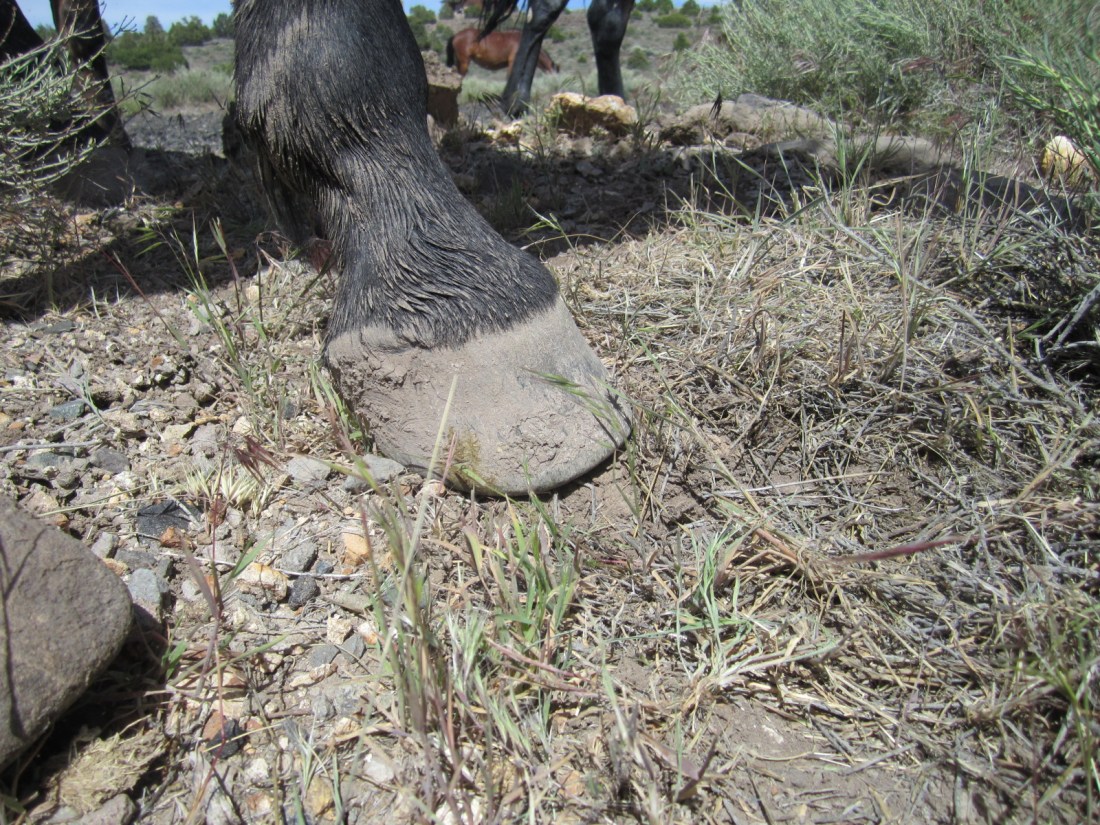
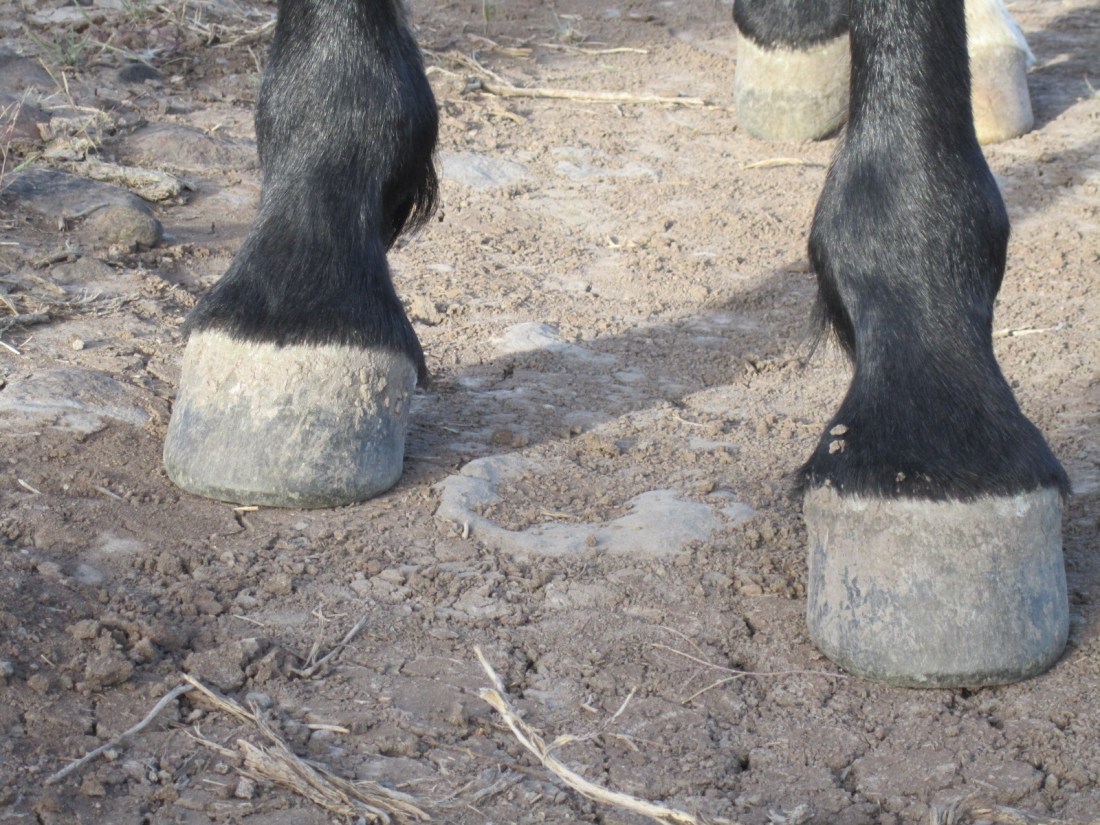
It’s not what your horse does after you give him a bath. It’s not how he gets fresh dirt on his back. It’s the natural rounding of the edge of the hoof that occurs in free-roaming horses and burros.
Here are two examples from the Virginia Range. The rounding of the edge eliminates what’s known as a ‘stress concentration’ in engineering work.
A sharp edge can be susceptible to cracks. Your farrier probably rounds the edge with a rasp when he trims your horse’s feet.
Next time he visits your ranch or barn, ask him about the mustang roll.
 Western Horse Watchers Association